Transit Insurance for Household Goods to India (2026)
What marine transit cover for a household shipment to India includes, the exclusions that decide most claims, how it differs from mover liability, and how to claim.
The 60-second version
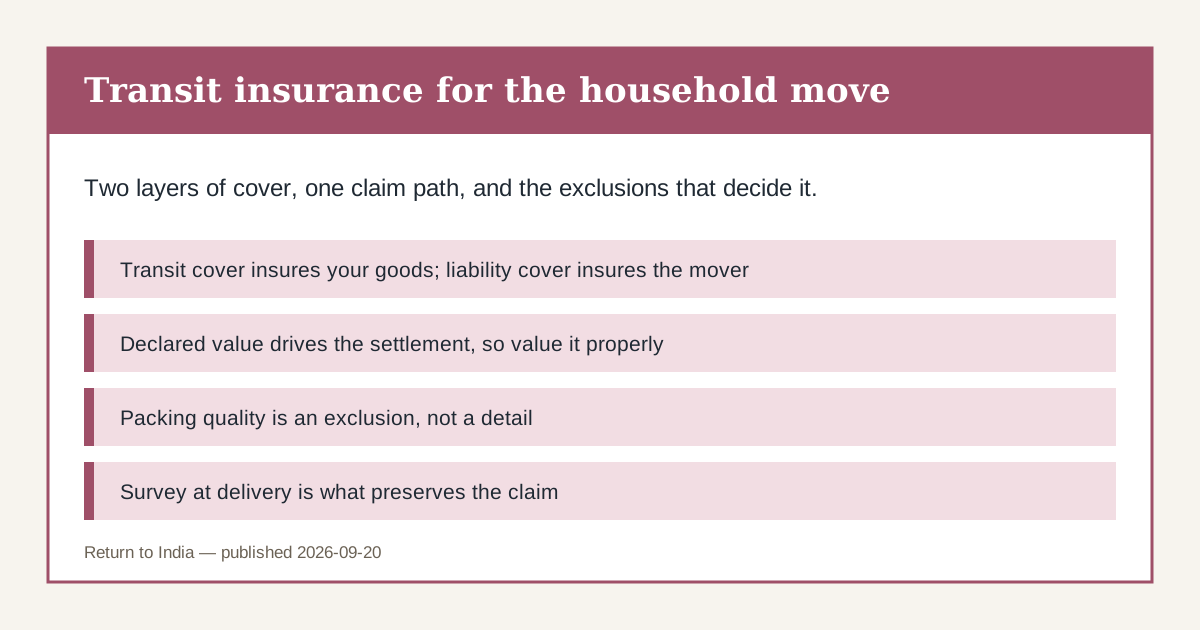
Household-goods transit insurance is a marine cargo policy on your own belongings. It is separate from the mover's liability cover, which protects the mover and pays far less. Cover is usually all-risks on a declared value with a deductible; the exclusions that decide most claims are inadequate packing, pre-existing damage, delay and unexplained shortages without a survey.
Two different policies are in play, and only one protects you
When a mover offers 'insurance', they are usually offering liability cover. That policy protects the mover against claims you make, and it typically pays out against a low limit per unit, per kilogram or per shipment, with depreciation applied. It is not a valuation of your belongings. Transit insurance, or marine cargo cover, is a policy you take on your own goods at a declared value. That is the one that pays what the goods were worth.
The declared value is the single most consequential number on the application. Under-insure and the settlement is proportionally reduced, because most policies apply an average clause — you recover the same proportion of the loss that your declared value bears to the real value. Over-insure and you pay a premium for nothing, since the indemnity is capped at the actual loss. The correct figure is replacement cost in India for the goods you are shipping, itemised for the high-value entries rather than summed into a single lump.
The exclusions decide most real claims. Damage from inadequate or insufficient packing is excluded, and that is where a large share of household claims die, because the packing was done by the mover whose liability cover refuses it and your transit policy excludes it. Pre-existing damage or wear, inherent vice of the item, delay and consequential loss, and mysterious disappearance without evidence of forcible entry are the other common ones. Read them before the container is loaded, because after loading you can only argue.
The claim path is short but time-bound. Notice to the insurer and the carrier as soon as damage is seen, a joint survey at delivery wherever the shipment size justifies it, photographs before unpacking, and the original shipping documents. Files that go wrong almost always go wrong on the survey — the surveyor never attended, or attended after the cartons were opened and the evidence was gone.
Insurance sits alongside, not inside, the customs and shipping sequence. Read it with the household shipment guide so the policy is bound before the container leaves, not while it is at sea.
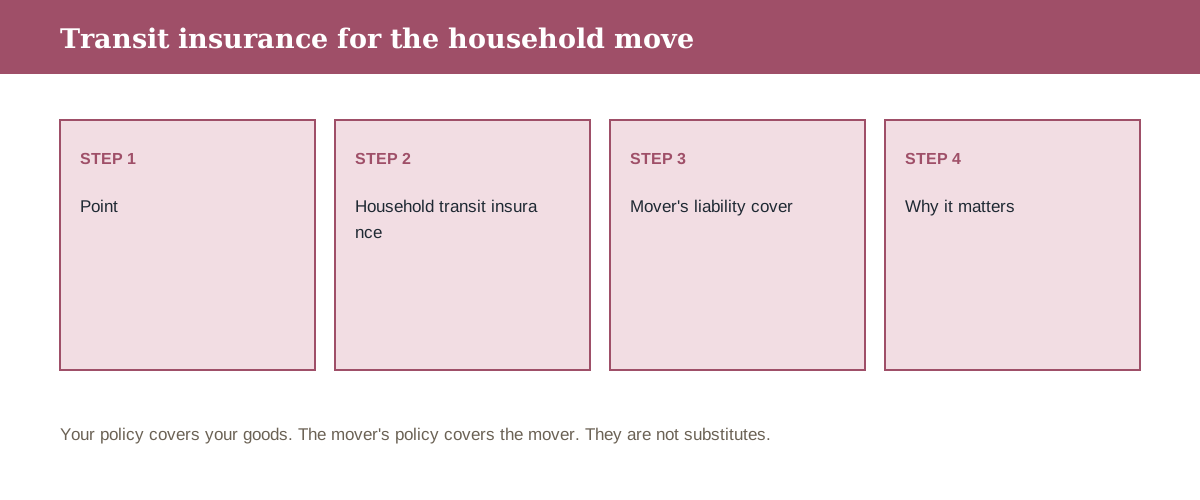
Transit cover against mover's liability
Ask the mover which document you are being offered. The answer changes what you recover.
| Point | Household transit insurance | Mover's liability cover | Why it matters |
|---|---|---|---|
| Who it protects | You, on your own goods | The mover, against your claim | Only one of these pays you the value |
| Basis of settlement | Declared value, all-risks where offered | Low per-unit or per-kg limit, depreciated | The limits differ by an order of magnitude |
| Who arranges it | You, or the mover acting for you | The mover | You must confirm who the insured actually is |
| Packing exclusion | Damage from inadequate packing excluded | Packing is the mover's own standard | The two refusals can meet in the middle |
| Survey requirement | Joint survey at delivery | Mover's own assessment | An unattended survey is the usual reason a claim fails |
| Premium basis | Value of the goods and route | Turnover of the mover | Cheap cover is cheap for a reason |
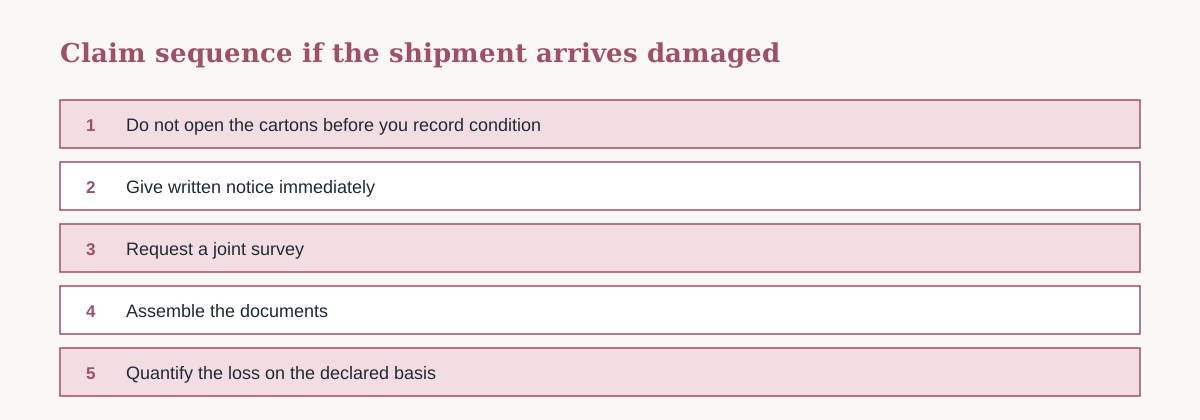
Claim sequence if the shipment arrives damaged
Every hour between delivery and notice works against you. This order is not optional.
Do not open the cartons before you record condition
Photograph the container, the seals, the outer cartons and any external damage first. Opened cartons with no before-photograph is the weakest possible starting position.
Give written notice immediately
Notify the insurer and the carrier in writing as soon as damage is apparent. Notice windows are short, and a phone call is not notice.
Request a joint survey
Where the shipment size or the loss justifies it, insist on a survey with the insurer's surveyor present before unpacking further. The survey report is the spine of the claim.
Assemble the documents
Policy, invoice or declared-value list, bill of lading or airway bill, packing list, survey report, repair or replacement quotations, and the photographs.
Quantify the loss on the declared basis
Compute the loss as the policy requires — usually replacement cost at destination less any salvage, and less the deductible. Keep the arithmetic visible.
Follow up in writing and keep the trail
Claims move on paper. Track every submission with a dated acknowledgement and escalate through the insurer's grievance channel if the timeline slips.
Pre-loading insurance pack
Complete this before the container is sealed. Nothing here can be fixed later.
- Itemised declared-value list at replacement cost in India
- High-value items listed separately with make and model
- Policy confirmed in your own name, or as the named insured
- Packing specification agreed in writing with the mover
- Exclusion list read and the packing standard checked against it
- Insurer's claim hotline and the notice window recorded
- Survey arrangement agreed for delivery day
- Originals of policy, bill of lading and packing list in your hand luggage
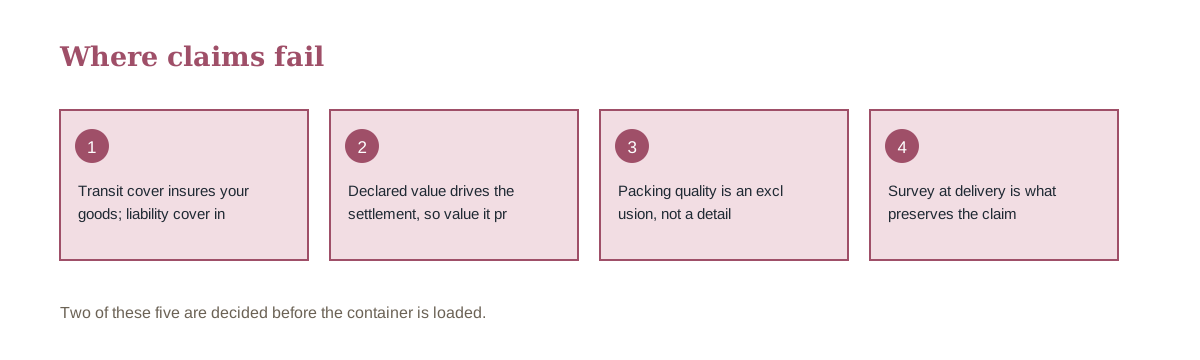
Where claims fail
Need help with Shipping & Customs?
Share your blocker in one line. Our experts will reply with practical next steps.
Community explainer: the compliance side of the same move
"Rules that govern the move itself, worth watching alongside the insurance decision."
Read on youtube ->Podcast: what a family wishes it had done differently
"A first-hand account of a return, including the parts of the logistics that surprised them."
Read on youtube ->Cover to settlement
Need help with Shipping & Customs?
Share your blocker in one line. Our experts will reply with practical next steps.
The packing exclusion is where household claims die
Damage arising from inadequate or insufficient packing is excluded, and the mover's own liability cover is written to protect the mover rather than to value your goods. If the packing standard is not agreed in writing before loading, both policies can decline the same loss.
The one-sentence answer
Take transit insurance on your own goods at replacement value in your own name, agree the packing standard in writing before loading, and insist on a joint survey at delivery — the mover's liability cover is not a substitute.
Animated decision map
Need help with Shipping & Customs?
Share your blocker in one line. Our experts will reply with practical next steps.
Interactive checkpoint
Turn this guide into a decision file
0 of 4 checked
Is movers insurance the same as transit insurance?
No. Mover's liability cover protects the mover against your claim and pays against low per-unit or per-kilogram limits with depreciation. Transit insurance is a policy on your own goods at a declared value.
What value should I declare for household goods transit insurance?
Replacement cost in India for the goods you are shipping, itemised for high-value entries. Most policies apply an average clause, so under-declaring proportionally reduces any settlement.
What is excluded from household goods transit insurance?
Commonly damage from inadequate or insufficient packing, pre-existing damage and wear, inherent vice, delay and consequential loss, and unexplained shortages without evidence of forcible entry.
Do I need a survey for a claim?
For a significant loss, yes. A joint survey at delivery, before the cartons are unpacked further, is the evidence base for the claim. Claims without one are the ones that fail.
How quickly must I notify the insurer?
As soon as damage is apparent, in writing. Notice windows are short and are a common technical reason for rejection, so treat the first working day as the deadline.
Are electronics and jewellery covered?
Electronics are usually covered under all-risks wording with conditions. Jewellery, bullion and cash are commonly excluded or subject to a much lower sub-limit, so check the schedule rather than assuming.
Does the policy cover customs-related detention?
Delay and consequential loss are typically excluded, and customs clearance problems are usually treated as delay. Handle documentation properly and treat insurance as protection against physical loss or damage rather than delays.
Can I insure only part of the shipment?
You can select items, but partial declarations interact badly with average clauses and with the requirement to declare the full consignment. If you are insuring the shipment, insure the shipment.
What happens if the mover packed and the goods are damaged?
You claim on your transit policy and the insurer may seek recovery from the mover. That is the practical reason to keep the packing specification and the mover's contract on file.
Is the premium worth it for a small shipment?
Compare the premium against the replacement cost of the few items you could not easily replace. For most household moves the answer is yes for the high-value list even if you self-insure the bulk.
Transfer of Residence relief doesn't happen automatically.
Wrong paperwork, wrong timing — and you're paying full customs duty. Get the shipping plan right the first time.