Health Insurance Waiting Periods + PED Rules 2026
30-day, specific-disease, and PED multi-year waits for returning NRIs — portability credit, disclosure, and year-one cash buffer.
The 60-second version
Most returnees buy a floater, then discover the policy does not pay for the exact condition that drove the move-home medical plan. Waiting periods and PED definitions decide that. This page is the waiting-period map: what starts the clock, what portability can shorten, and what cash buffer you still need in year one.
Why waiting periods decide year-one medical risk
A family floater with a large sum insured can still refuse the hospital bill that matters if the condition sits inside a waiting period. Returning NRIs often carry US/UK/UAE medical histories, half-disclosed PEDs, and a gap between foreign cover ending and India cover starting. That gap plus PED waits is the real cash-risk window.
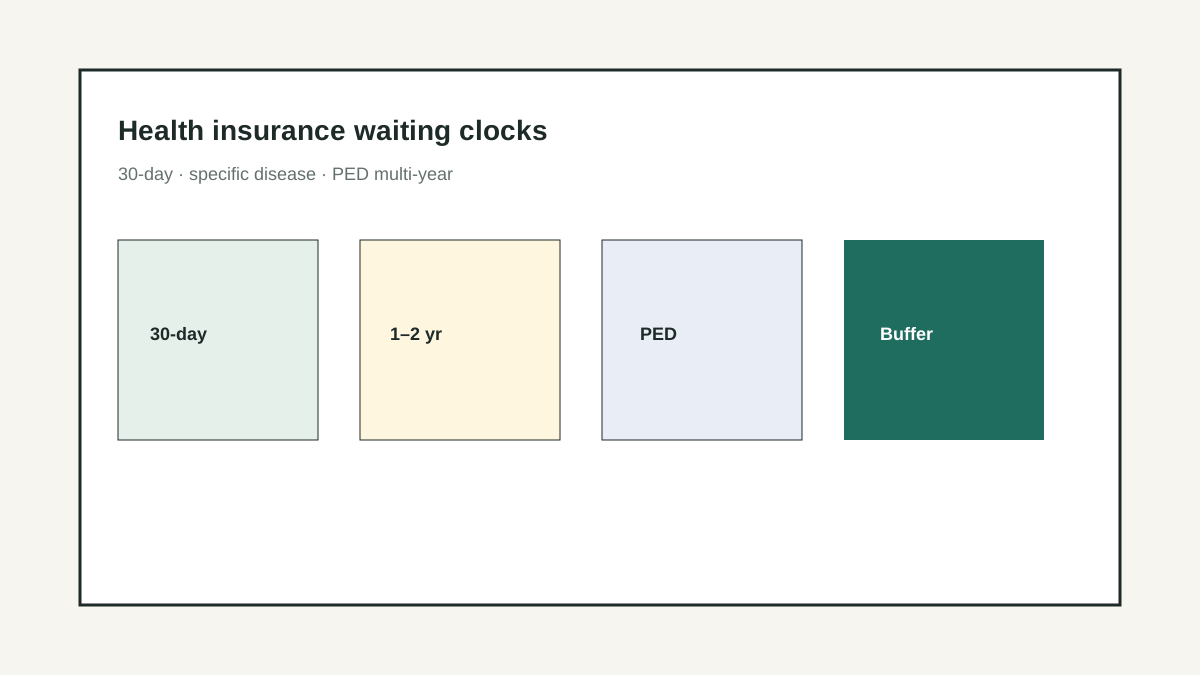
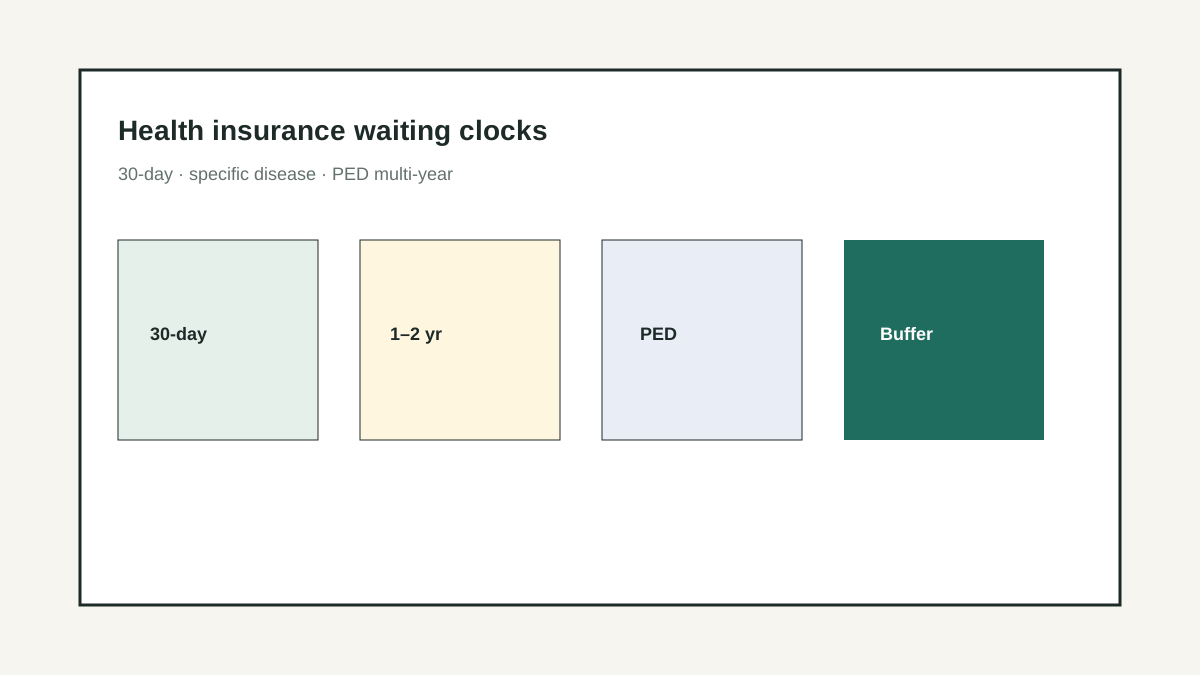
Separate three clocks: (1) initial waiting period after policy start, (2) specific-disease waits (often 1–2 years for listed conditions), (3) pre-existing disease (PED) waits (commonly up to 2–4 years depending on product and continuous coverage). Portability can credit continuous prior cover under IRDAI rules when the paperwork is clean — it does not invent continuous cover you never had.
Waiting-period clock matrix (typical retail products)
Exact days are product-specific. Read the policy wordings; use this matrix to know which clock you are negotiating.
| Clock | Typical length | What it usually blocks | How returnees shorten risk |
|---|---|---|---|
| Initial / general waiting period | Often ~30 days from risk start | Non-accident hospitalisation early on | Buy before landing; do not delay proposal until first OPD crisis |
| Specific disease / procedure wait | Often 1–2 years for listed items | Named conditions/procedures in the schedule | Compare wordings; do not assume US diagnosis is automatically excluded forever |
| PED waiting period | Often 2–4 years continuous | Conditions that existed before risk inception (as defined) | Honest disclosure + portability credit where eligible |
| Maternity (if opted) | Often 9–36 months depending on plan | Delivery / related hospitalisation | Buy early if planning pregnancy; do not rely on group cover alone |
| Break in coverage | Resets continuous-cover credit | Restarts waits as a new risk | Avoid lapse between foreign exit and India inception |
Eight-step waiting-period plan for returnees
Build a clinical truth sheet before any proposal
Per person: diagnoses, surgeries, meds, last labs, allergies. Pull foreign summaries. This becomes the disclosure base — not a marketing questionnaire you invent under stress.
Decide buy-before-landing vs day-of-landing risk
If you can start India cover before the flight, the initial waiting clock can finish while you travel. If you wait until the first fever in India, you stack medical risk on paperwork risk.
Compare PED definitions, not only premium
PED definitions and look-back language differ. A cheap premium with a harsh PED definition is not a bargain for a family with chronic meds.
Use IRDAI portability only when continuous cover exists
Portability can carry waiting-period credit from a prior India policy. Foreign group cover is not automatically portable into an India retail policy. Confirm what the insurer will credit in writing.
Pair base floater with super-top-up deliberately
Super-top-up has its own deductible and waiting rules. Do not assume the top-up inherits every base-policy credit without reading both contracts.
Disclose PEDs completely; never ‘optimise’ silence
Non-disclosure is the fastest path to claim rejection years later. If a condition is debatable, disclose and let underwriting load or exclude transparently.
Keep a year-one cash buffer for waiting windows
Budget OPD, diagnostics, and possible self-pay hospitalisation for conditions still inside waits. Insurance is not your only risk control.
Calendar continuous renewal 45 days before expiry
A break in coverage can reset continuous-cover benefits. Put renewal on the same operating calendar as Form 15H, life certificate, and school fees.
Returnee scenario map
| Scenario | Highest risk clock | First move |
|---|---|---|
| Healthy family, no meds, flexible landing | Initial 30-day | Incept cover before flight; add accident understanding for early period |
| Parent with diabetes / BP / heart history | PED wait | Full disclosure, compare PED definitions, plan cash buffer, consider senior-specific products carefully |
| Prior India retail policy still continuous | Portability paperwork | Start portability before gap; keep prior policy schedule + claim history |
| Only foreign employer group cover ending | New-risk waits | Do not assume foreign group years count as India continuous cover |
| Pregnancy planned in 12–24 months | Maternity wait | Buy maternity-capable cover early; verify waiting months and room limits |
| Senior 70+ parent joining household | PED + entry age | Check entry age caps, PED loads, and government scheme eligibility separately |
Proposal and claim packet
- Clinical truth sheet per family member (PDF).
- Prior India policy schedule + renewals if porting.
- Foreign discharge summaries for major conditions.
- Current medicine list with generic names.
- Proposal form copy + medicals reports.
- Policy wordings + waiting-period schedule saved offline.
- TPA / cashless network hospitals near home and parents.
- Year-one self-pay buffer amount agreed in family budget.
Cover start flow
Need help with Move Planning?
Share your blocker in one line. Our experts will reply with practical next steps.
Myth: ‘Large sum insured means day-one cover for everything’
Sum insured caps how much can be paid if a claim is admissible. Waiting periods and PED rules decide whether the claim is admissible at all. A ₹1 crore policy inside a PED wait can still pay ₹0 for that condition. Read the waits before you celebrate the brochure number.
Quick visual

Animated decision map

Community signal
What to watch in real discussions
Treat repeated complaints as risk signals rather than official advice. This page does not link to community search results.
Interactive checkpoint
Turn this guide into a decision file
0 of 4 checked
What is a PED waiting period in Indian health insurance?
A pre-existing disease (PED) waiting period is the continuous time after policy start during which hospitalisation linked to conditions that existed before cover may not be payable, as defined in the policy. Lengths are product-specific and often multi-year.
Does foreign health insurance reduce PED waits in India?
Not automatically. IRDAI portability credits typically relate to prior Indian policies with continuous cover. Foreign employer group cover rarely ports as continuous India retail cover. Confirm with the insurer in writing.
When should returning NRIs buy India health cover?
As early as you can complete KYC and underwriting — ideally so the initial waiting period runs before or around landing. Do not wait for the first emergency in India.
What happens if I break coverage for a few months?
A break can restart continuous-cover benefits and waiting-period credit. Treat renewals as critical operations, not optional admin.
Is accident cover also under the 30-day wait?
Many products treat accidents differently from illness in the early period, but you must read the exact wording. Never assume; verify the initial-wait exceptions table.
Should I hide a minor condition to get a cheaper premium?
No. Non-disclosure can void claims later. Transparent underwriting with a possible loading is safer than a cheap policy that fails when you need it.
The plan is only as good as the sequence.
Tax, banking, schools, shipping — they all have dependencies. A wrong order costs months and lakhs. Get it right.