The 60-second version
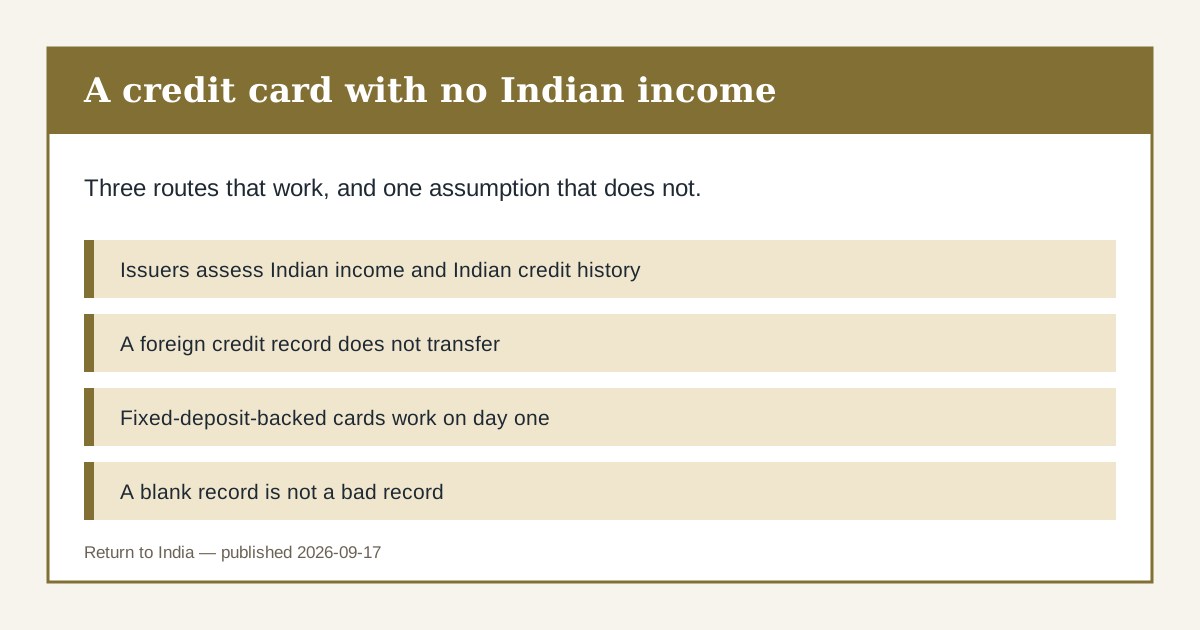
Indian issuers assess you on Indian income, Indian credit history and the bank's own relationship with you. A returned NRI with none of the first two has three practical routes: a fixed-deposit-backed secured card, a pre-approved offer from the bank where your salary or deposits now sit, or a supplementary card on a family member's primary account. Your foreign credit record does not transfer.
Your eligibility is a function of three things, none of which is your salary abroad
Indian card issuers price risk on Indian income, Indian credit history, and the issuer's own relationship with you. A decade of on-time payments in another country sits outside that model, because the bureaus are separate and there is no reciprocal data feed. The fastest way to stop being frustrated is to accept that and work the routes that do not depend on it.
Route one is the secured card. You place a fixed deposit with the issuer and the card is issued against it, usually at a limit tied to the deposit. It is not a second-class product — it reports to the bureaus exactly like an unsecured card, which is the point. Six to twelve months of clean usage creates the Indian credit record that unlocks an unsecured card later.
Route two is the relationship route. If your salary, pension or substantial deposits now sit with one bank, that bank can see your inflows and may issue on that basis even without a bureau record. This is the most common successful path for a returning professional, and it is why the order of operations matters: land the money first, then ask, not the other way round.
Route three is a supplementary card on a family member's primary account. It is quick and builds no independent record for you, so treat it as a stopgap rather than a strategy.
One thing to check before you start: whether any old Indian card is still open. An NRI-era card left dormant, or one that was closed with a balance, can sit on your file. The application guide walks the form itself; this page is about passing the eligibility test that precedes it.
The three routes compared
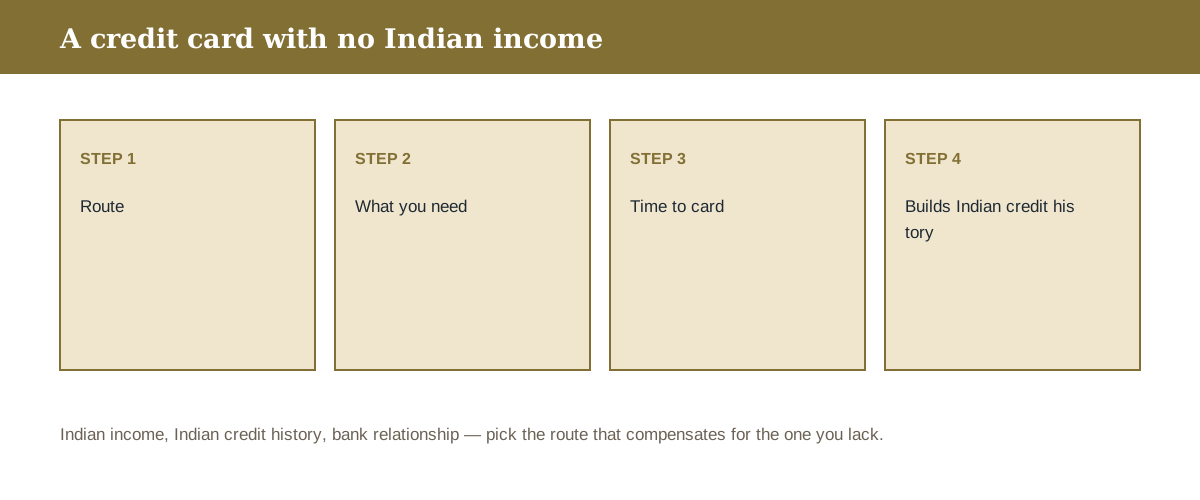
Choose on speed and on whether you need an independent credit record, not on which product sounds better.
| Route | What you need | Time to card | Builds Indian credit history |
|---|---|---|---|
| Secured card against a fixed deposit | A deposit with the issuer | Days to a few weeks | Yes — reports like any card |
| Relationship-based approval | Salary, pension or deposits already with the bank | One to four weeks | Yes |
| Supplementary card on a family account | A primary cardholder willing to add you | Days | No independent record |
| Unsecured card on foreign income alone | Not accepted by Indian issuers as a rule | — | — |
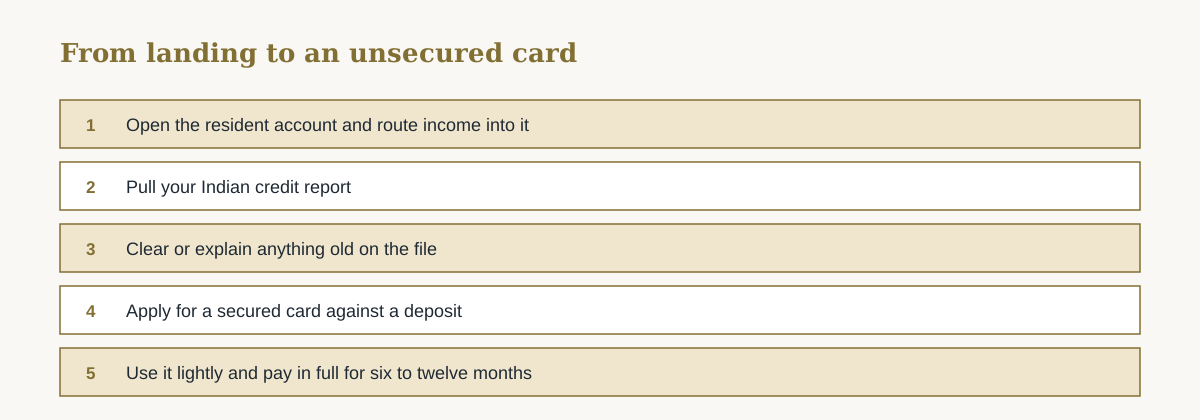
From landing to an unsecured card
The sequence below front-loads the two things issuers check and back-loads the upgrade.
Open the resident account and route income into it
Choose one bank as your primary and put salary, pension or regular transfers through it. Statement history is the evidence an issuer can actually read.
Pull your Indian credit report
Get the report before you apply. A blank file and a file with an old settled or written-off entry need completely different handling.
Clear or explain anything old on the file
An NRI-era card with a lingering balance, or an old mobile or utility default, will surface at application time. Deal with it first.
Apply for a secured card against a deposit
Ask specifically for the deposit-backed product. Confirm in writing that it reports to the credit bureaus, because that is the entire purpose.
Use it lightly and pay in full for six to twelve months
Low utilisation and full payment. This is how a blank file becomes a good file.
Then ask the relationship bank for an unsecured upgrade
With statement history in one place and a clean bureau record, the upgrade conversation is straightforward and the deposit can usually be released.
Application pack for a returned NRI
Issuers ask for less than people expect, but they check more.
- Resident savings account with at least three months of statement history
- PAN with an active Aadhaar link
- Aadhaar and passport with the entry record
- Proof of the current Indian address
- Salary slips, appointment letter or pension credit evidence where available
- Indian credit report pulled before applying
- Any old Indian card accounts identified and resolved
- Written confirmation that the chosen product reports to credit bureaus
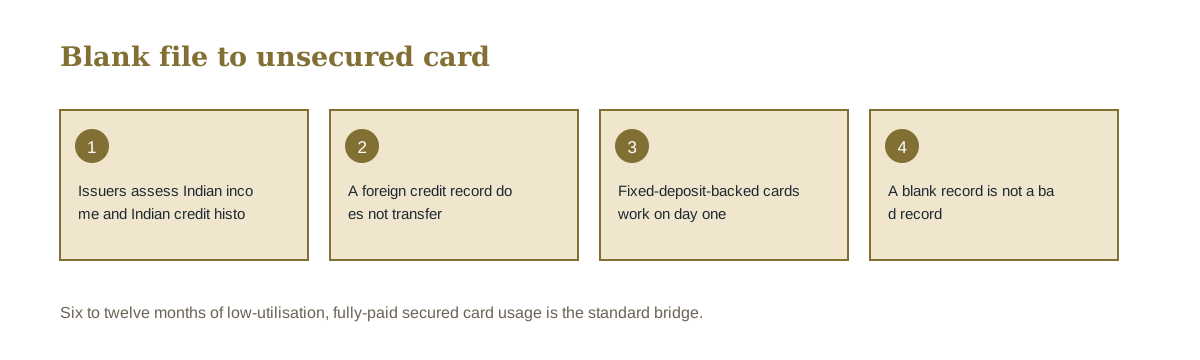
Blank file to unsecured card
Need help with Banking?
Share your blocker in one line. Our experts will reply with practical next steps.
Community explainer: why the Indian rule differs from what you expect
"The bank-side compliance rules that decide what you can be offered in your first year back."
Read on youtube ->Podcast: the order of operations after landing
"Why doing banking tasks in the right sequence saves months, including on credit products."
Read on youtube ->Eligibility path
Need help with Banking?
Share your blocker in one line. Our experts will reply with practical next steps.
Do not assume your foreign credit score helps
There is no reciprocal credit-data feed between Indian bureaus and foreign bureaus. A decade of on-time payments abroad does not appear on your Indian file, and presenting it will not substitute for a deposit or an Indian relationship. Plan around that rather than arguing with it.
The one-sentence answer
With no Indian income history, take the secured card against a fixed deposit, route income through one resident account, keep six to twelve months of clean usage, then ask that bank for the unsecured upgrade.
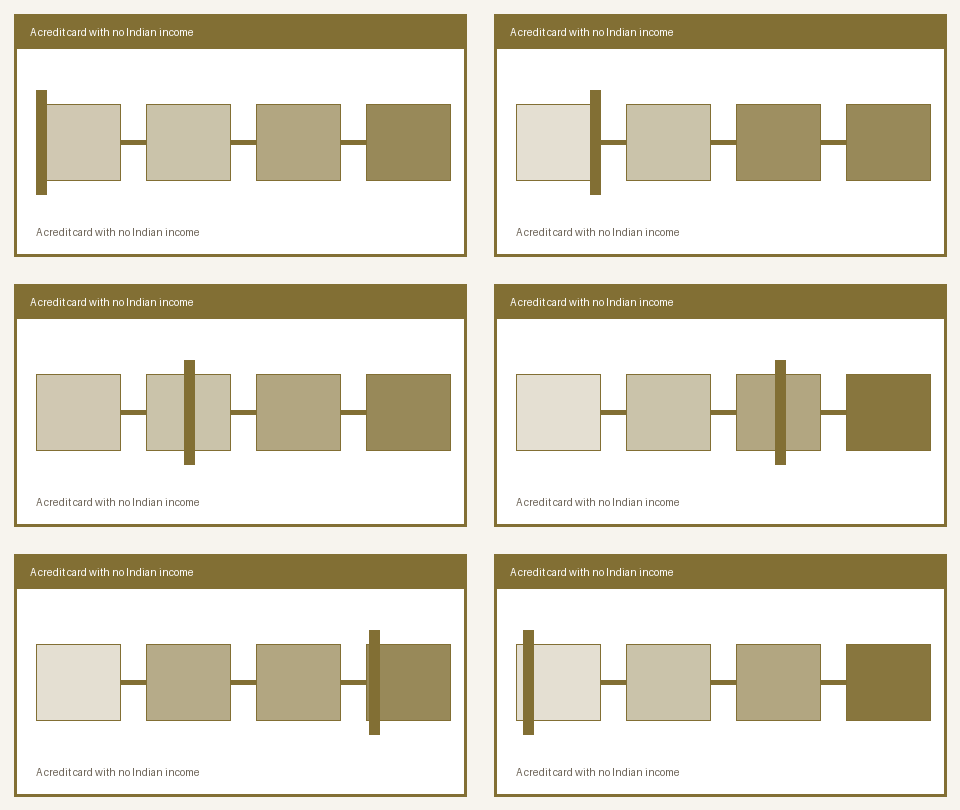
Animated decision map
Need help with Banking?
Share your blocker in one line. Our experts will reply with practical next steps.
Interactive checkpoint
Turn this guide into a decision file
0 of 4 checked
Can I get a credit card in India without an Indian salary?
Yes, through a fixed-deposit-backed secured card, through the bank's own relationship where your deposits or pension sit, or as a supplementary holder on a family member's account.
Does my foreign credit history transfer to India?
No. Indian bureaus do not receive credit data from foreign bureaus, so your overseas record does not appear on your Indian credit file.
What is a secured credit card?
A card issued against a fixed deposit you place with the issuer. The limit is usually a proportion of the deposit, and the card reports to the credit bureaus like any other card.
Is a blank credit file worse than a bad one?
A blank file is easier to work with. There is no adverse entry to explain, so a short period of well-managed usage usually progresses you to an unsecured card.
How much deposit do I need for a secured card?
It varies by issuer. Ask for the minimum deposit and the resulting limit before you apply, and confirm the deposit can be released after the upgrade.
What happens to my NRI credit card when I return?
An NRI-designated card should be closed or converted as part of your status change. Leaving it dormant without addressing it can put an entry on your Indian file that complicates later applications.
Will an old written-off card abroad or in India affect me?
An Indian written-off or settled entry will appear and will be asked about. A foreign one does not reach the Indian bureaus, though banks may ask about it in a formal application.
How long until I can get an unsecured card?
Commonly six to twelve months of clean secured-card usage, or sooner if the relationship bank can see regular salary or pension credits and is willing to underwrite on that basis.
Can I get a card on a pension or rental income?
Yes, where the income is documented and lands in an account with the issuer. Consistent inflows are what the underwriting actually looks at.
Do I need to close my foreign cards before applying?
Not necessarily, but resolve them deliberately rather than letting them lapse. An unresolved foreign card can become a collections problem later and will surface in a detailed application.
Your NRE account redesignation has a deadline.
Banks don't remind you. You need the right account stack before salary, rent, and EMIs start moving. Get the exact sequence.