Canada TFSA After Moving Back to India: Tax Checklist
Handle a TFSA after moving to India with CRA non-resident rules, broker access, India tax reporting, Schedule FA, and records.
The 60-second version
A TFSA is tax-free in Canada only within Canadian rules. After moving to India, the practical question is contribution room, non-resident penalties, broker limits, India tax scope, and foreign-asset reporting.
Fast answer
After moving from Canada to India, do not contribute to a TFSA unless you have confirmed Canadian tax residency and CRA rules. Then separately review whether India taxes or requires reporting of TFSA income, gains, holdings, and accounts after Indian residential status changes.
Most Canadian pages focus on CRA non-resident contribution penalties. This guide adds the India-side problem: the same TFSA can be a foreign account or investment file for Indian reporting once you become resident in India.
Decision table
The useful answer changes by residency status, documentation, institution rules, timing, and what remains reversible.
| Situation | Best next move | Proof before you act |
|---|---|---|
| You are Canadian non-resident | Avoid accidental TFSA contributions | CRA contribution-room evidence, residency date, and bank or broker transaction history. |
| TFSA still holds ETFs or stocks | Export holdings and transaction history | Statements, cost basis, dividends, sales, and broker access rules. |
| You are Indian resident | Review India tax and reporting scope | India residency working, foreign asset file, and income or gain calculations. |
Execution order
The order matters. Most failed return plans do the right tasks in a sequence that creates avoidable friction.
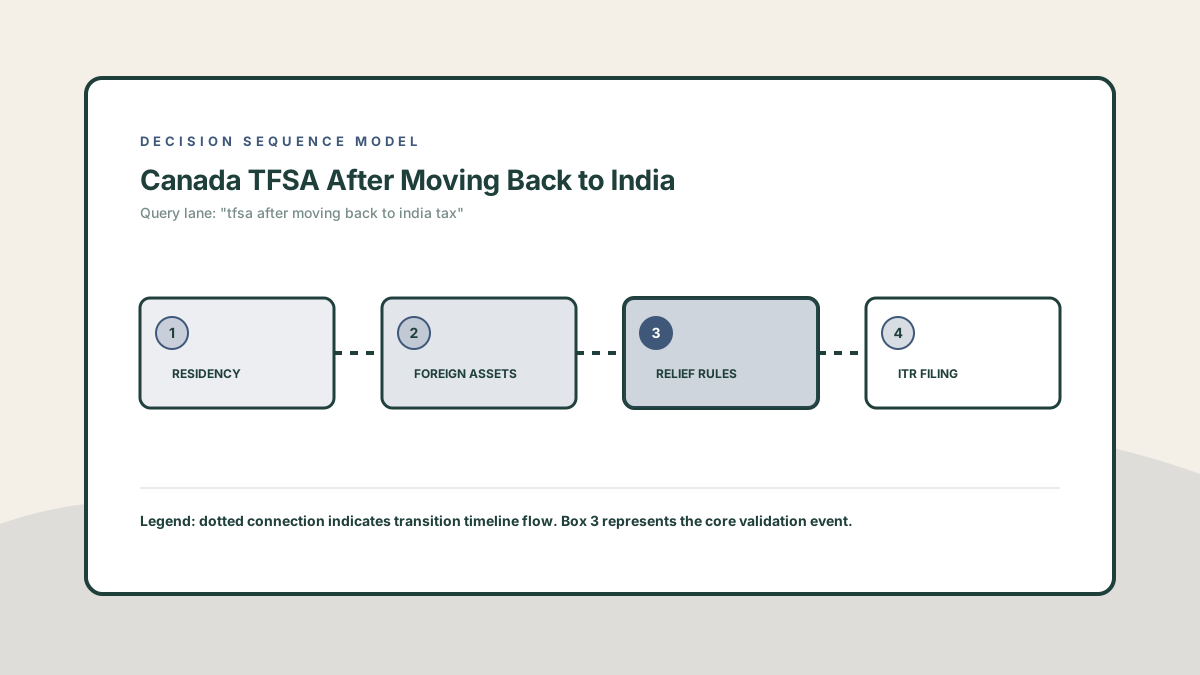
Lock contribution behavior
Stop automated contributions, dividend reinvestment assumptions, and transfers until Canadian residency status is clear.
Confirm broker policy
Ask what trading, address, phone, tax form, and account-access limits apply after moving to India.
Build India reporting file
Export balances, holdings, income, gains, tax slips, and any non-resident contribution correspondence.
Choose hold, simplify, or collapse
Compare Canada tax, India tax, reporting effort, broker access, currency, and future Canada plans.
Pre-commit checklist
Do not mark this topic complete until each line has an owner, a document, and a calendar deadline.
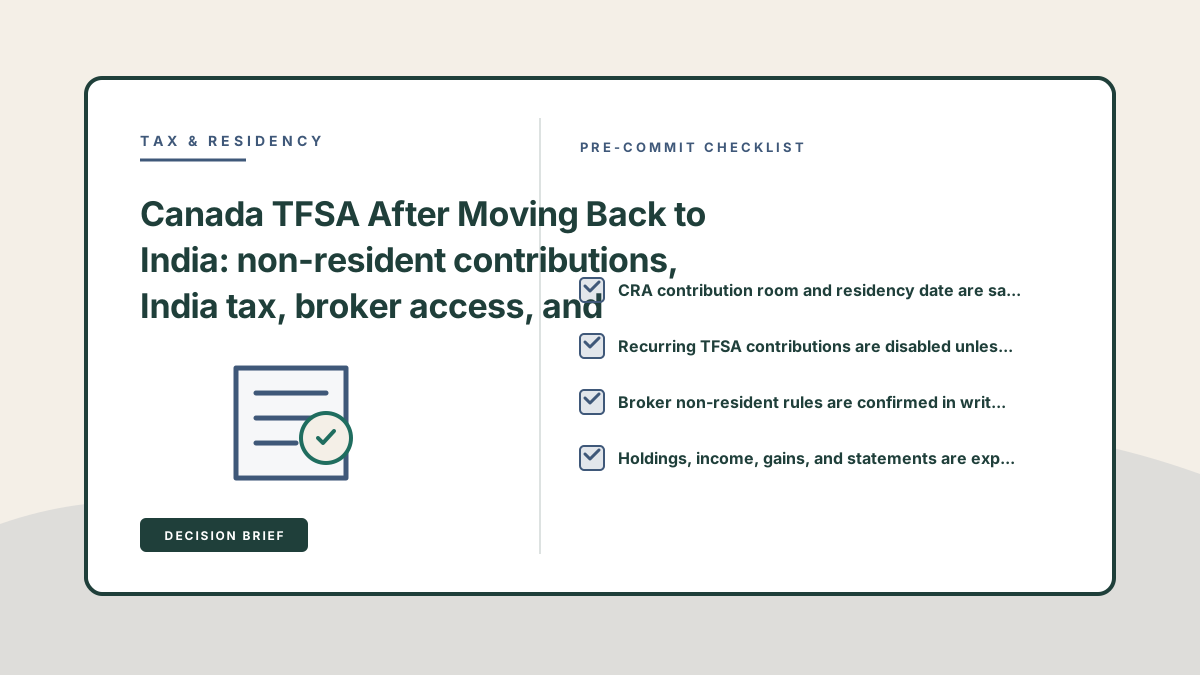
- CRA contribution room and residency date are saved.
- Recurring TFSA contributions are disabled unless permitted.
- Broker non-resident rules are confirmed in writing.
- Holdings, income, gains, and statements are exported.
- India tax and Schedule FA review is documented.
Animated decision map
Need help with Tax & Residency?
Share your blocker in one line. Our experts will reply with practical next steps.
Workflow map
What this guide adds beyond generic results
The guide separates Canada's TFSA contribution rule from India's foreign-asset and income reporting problem, which first-page results often leave disconnected.
Animated decision map

Community signal
What to watch in real discussions
Treat repeated complaints as risk signals rather than official advice. This page does not link to community search results.
Interactive checkpoint
Turn this guide into a decision file
0 of 4 checked
Can I keep a TFSA after moving to India?
Canadian rules can allow holding a TFSA, but non-resident contributions can trigger tax. Provider access and India reporting need separate review.
Is a TFSA tax-free in India?
Do not assume Canadian tax-free treatment carries into India. Indian residential status, income, gains, and reporting rules need review.
Should I withdraw the TFSA before moving?
It depends on tax, contribution room, broker access, currency, future Canada plans, and India reporting burden.
Your tax year is already running.
RNOR status, exit timing, and DTAA benefits all depend on decisions you make before you land. Don't guess.