Aadhaar, PAN, Mobile Number After Returning to India
Reset India identity after return: mobile OTP, PAN status, Aadhaar eligibility, tax portal, bank KYC, demat KYC, and proof files.
The 60-second version
The first month back often breaks on identity plumbing. PAN status, Aadhaar eligibility, mobile OTP, bank KYC, tax login, demat, mutual funds, and address proof must be sequenced before deadlines hit.
Fast answer
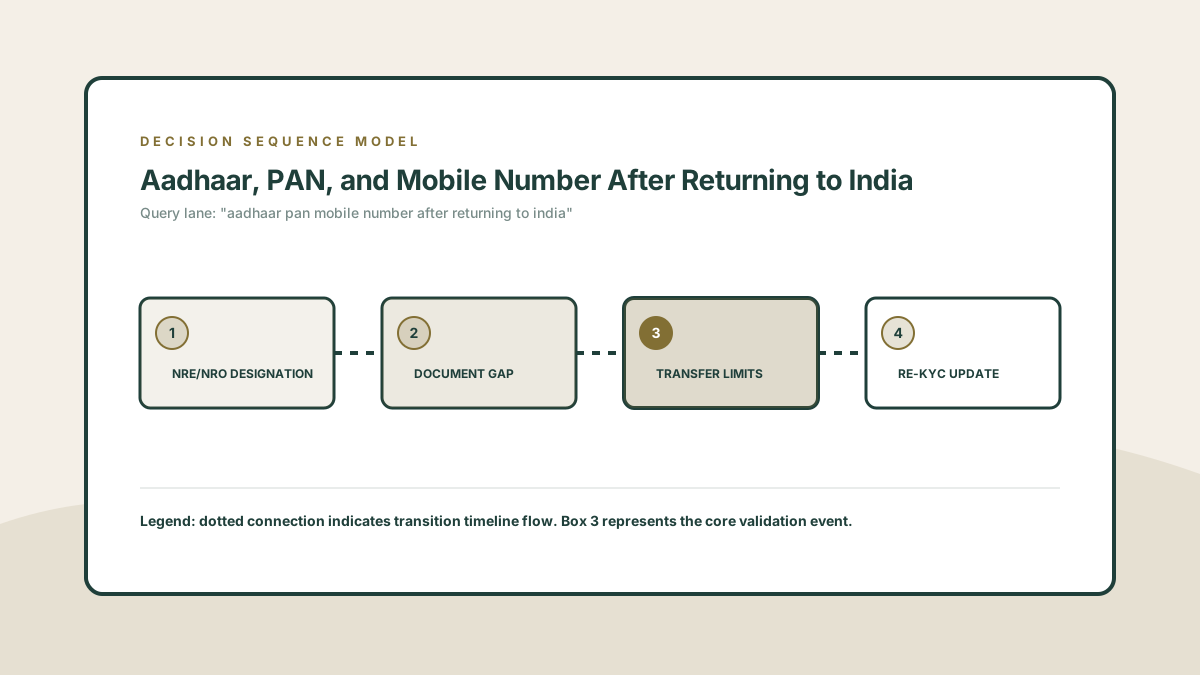
After returning to India, build identity access in this order: active Indian mobile number, PAN status, Aadhaar eligibility or update, income tax portal access, bank KYC, demat and mutual fund KYC, and address proof. Do not change every account at once without OTP recovery.
Most pages explain Aadhaar or PAN separately. Returning families need the combined failure map because bank logins, tax portal access, SIM ownership, demat re-KYC, and address proof can all depend on each other.
Decision table
The useful answer changes by residency status, documentation, institution rules, timing, and what remains reversible.
| Situation | Best next move | Proof before you act |
|---|---|---|
| You have no active Indian SIM | Get phone access before KYC changes | SIM ownership documents, OTP recovery plan, and alternate email. |
| PAN shows mismatch or inactive status | Fix tax-profile status before bank escalation | PAN record, Aadhaar status, NRI or resident profile, and JAO note if needed. |
| Bank and demat KYC are old | Update in a controlled order | Address proof, mobile OTP, PAN, Aadhaar if applicable, and bank acknowledgement. |
Execution order
The order matters. Most failed return plans do the right tasks in a sequence that creates avoidable friction.
Secure the phone number
Use one primary Indian number for banking and tax OTPs, and keep the foreign number active until recovery paths work.
Check PAN and Aadhaar status
Confirm whether Aadhaar-PAN linking, exemption, or profile update applies to your current status.
Update the tax portal
Make sure email, mobile, address, and residential profile are current before filing or bank KYC changes.
Update banks and investments
Sequence bank KYC, demat re-KYC, mutual fund folios, insurance, and employer payroll after OTP access is stable.
Pre-commit checklist
Do not mark this topic complete until each line has an owner, a document, and a calendar deadline.
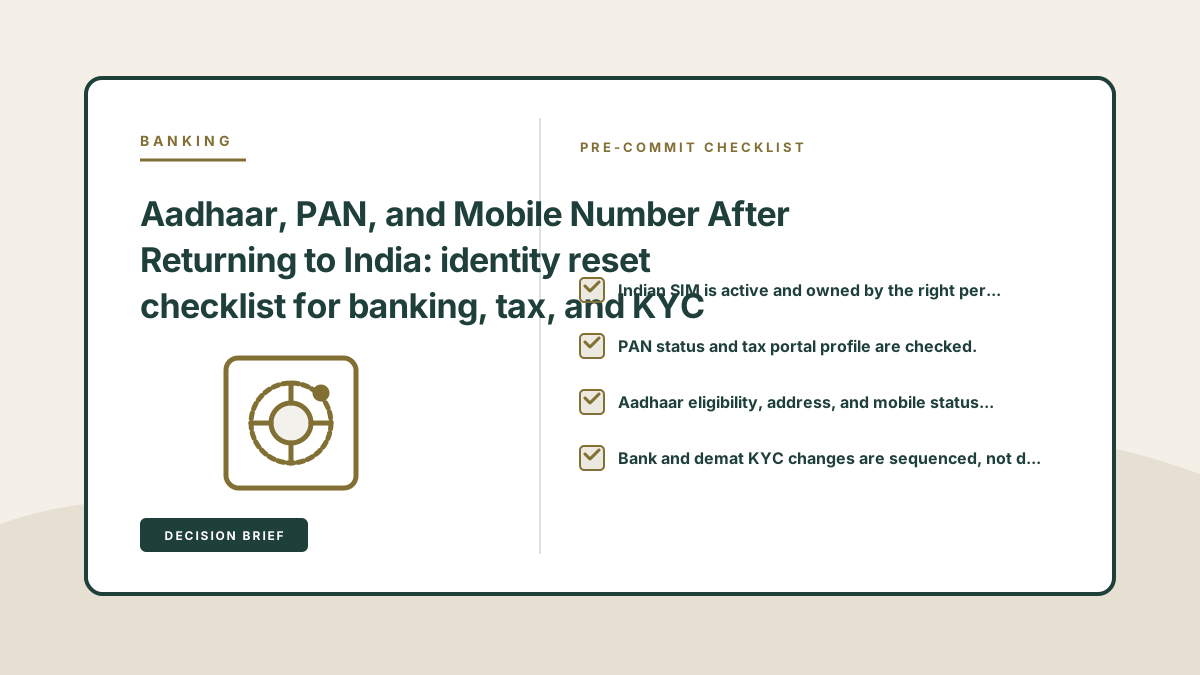
- Indian SIM is active and owned by the right person.
- PAN status and tax portal profile are checked.
- Aadhaar eligibility, address, and mobile status are documented.
- Bank and demat KYC changes are sequenced, not done randomly.
- Acknowledgements and screenshots are saved for each institution.
Animated decision map
Need help with Banking?
Share your blocker in one line. Our experts will reply with practical next steps.
Workflow map
What this guide adds beyond generic results
This guide treats identity as infrastructure. It is more useful than isolated PAN or Aadhaar articles because the friction appears between systems.
Animated decision map

Community signal
What to watch in real discussions
Treat repeated complaints as risk signals rather than official advice. This page does not link to community search results.
Interactive checkpoint
Turn this guide into a decision file
0 of 4 checked
Do returning NRIs need Aadhaar?
Eligibility and requirement depend on current status and use case. Use UIDAI and Income Tax Department guidance before assuming.
Should I update mobile number first?
Usually yes, because tax, bank, demat, and Aadhaar workflows can all depend on OTP access.
What if PAN-Aadhaar linking does not apply to me?
Keep proof of status and update the appropriate tax profile or authority channel so institutions do not treat the PAN as unresolved.
Your NRE account redesignation has a deadline.
Banks don't remind you. You need the right account stack before salary, rent, and EMIs start moving. Get the exact sequence.