SSI, Medicaid, Medicare After Moving to India
Moving to India with US benefits? See what stops, what needs SSA screening, and what replaces SSI, Medicaid, Medicare, and SSDI gaps.
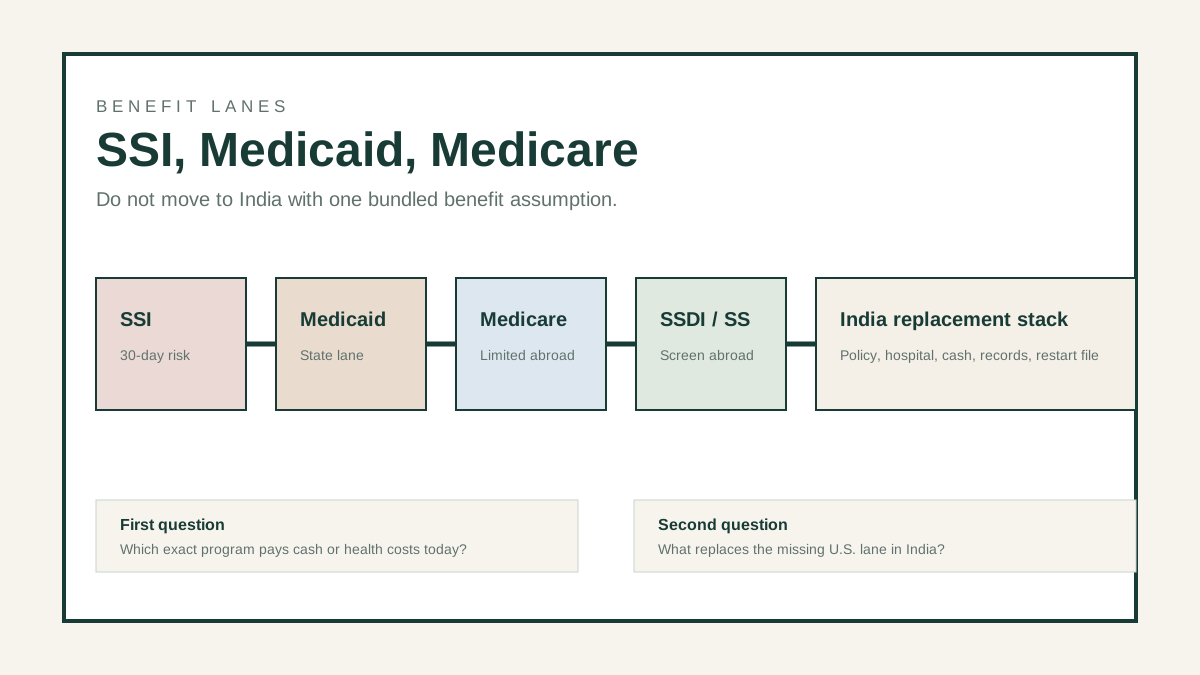
Fast answer: SSI and Medicaid are not portable India plans
If you move to India, split the U.S. benefit stack before you make any cash-flow or medical-care plan. SSI is Supplemental Security Income, a needs-based benefit with U.S. presence rules. Medicaid is state-run health coverage tied to state eligibility and residency. Medicare is a federal health program with very limited foreign-care coverage. Social Security retirement or SSDI may be payable abroad in many cases, but those are different programs with different forms and country rules.
The highest-risk assumption is that a person can keep SSI cash, Medicaid health coverage, and Medicare access while living in India because Social Security retirement benefits may continue abroad. SSA's SSI rules say an individual generally becomes ineligible after being outside the United States for a full calendar month or 30 consecutive days, with narrow exceptions. Medicaid.gov describes Medicaid as state eligibility, and the U.S. State Department warns that Medicare and Medicaid do not pay medical care outside the United States.
The practical answer is a replacement plan: report the move before it creates an overpayment, screen Social Security or SSDI separately, keep Medicare only after modeling U.S. return risk and penalties, and build an India health insurance plus cash-care file that does not depend on Medicaid paying an Indian hospital.
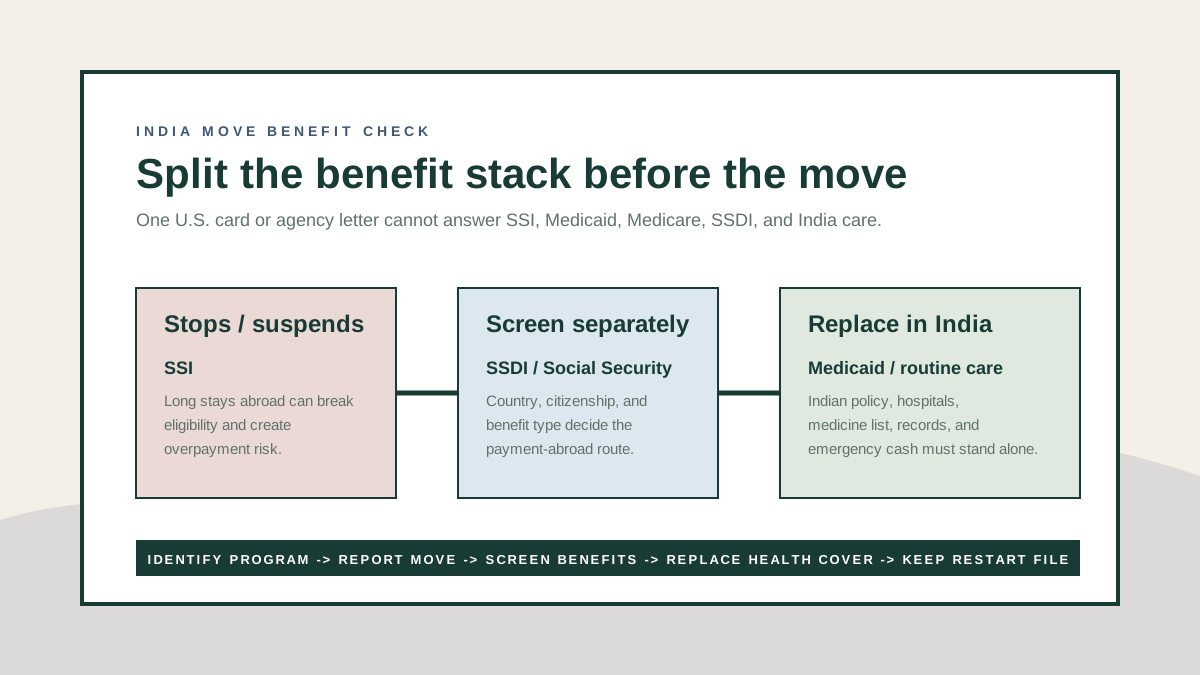
SSI, Medicaid, Medicare, SSDI, and Social Security: what changes after an India move
Use this matrix before moving, extending a trial stay, changing address, or putting U.S. benefits into an India budget.
| Benefit or program | Portable to India? | Decision to make before leaving | Common failure |
|---|---|---|---|
| SSI cash benefit | Generally no for a long India stay. SSA says SSI is not payable for a full calendar month outside the U.S. or after 30 consecutive days outside the U.S., unless a narrow exception applies. | Report the trip or move, estimate the suspension date, and prevent overpayment. | Confusing SSI with Social Security retirement or SSDI and counting SSI as India income. |
| SSDI disability benefit | Potentially, but only after SSA payment-abroad rules are checked for citizenship, country, and benefit type. | Run SSA's Payments Abroad Screening Tool and save the result with claim and address records. | Assuming SSDI follows SSI rules, or assuming SSI follows SSDI rules. |
| Social Security retirement or survivors benefit | Often possible, but not automatic for every citizenship and dependent-benefit case. | Use the Social Security claim-from-India workflow, direct-deposit decision, tax file, and annual questionnaire calendar. | Answering only the 40-credit question and missing foreign-payment forms or withholding. |
| Medicaid | Not an India health plan. Medicaid eligibility is state-linked, and the State Department warns Medicare and Medicaid do not pay medical care outside the U.S. | Ask the state agency what must be reported, how absence affects eligibility, and what happens at renewal. | Keeping a card and discovering it does not pay an Indian hospital or preserve state eligibility. |
| Medicare | Limited foreign coverage. Original Medicare has narrow exceptions, while Medigap or plan-specific travel benefits may be limited emergency cover, not India resident insurance. | Model Part B, Part D, Medicare Advantage, Medigap, India insurance, and U.S. return risk separately. | Treating Medicare as an India hospital plan or dropping Part B without a restart file. |
| Dual eligible: Medicare plus Medicaid | The dual status is U.S. operating support, not a portable India care stack. | Separate Medicare enrollment decisions from Medicaid state eligibility and India health coverage. | Assuming Medicaid will keep paying Medicare cost-sharing or long-term services while India is the real residence. |
| India replacement stack | This is the actual treatment stack in India: Indian health insurance, local hospitals, cash buffer, prescription continuity, and medical records. | Choose cover before waiting periods, pre-existing-condition disclosure, and local hospital access become urgent. | Trying to solve India care after SSI or Medicaid has already stopped. |
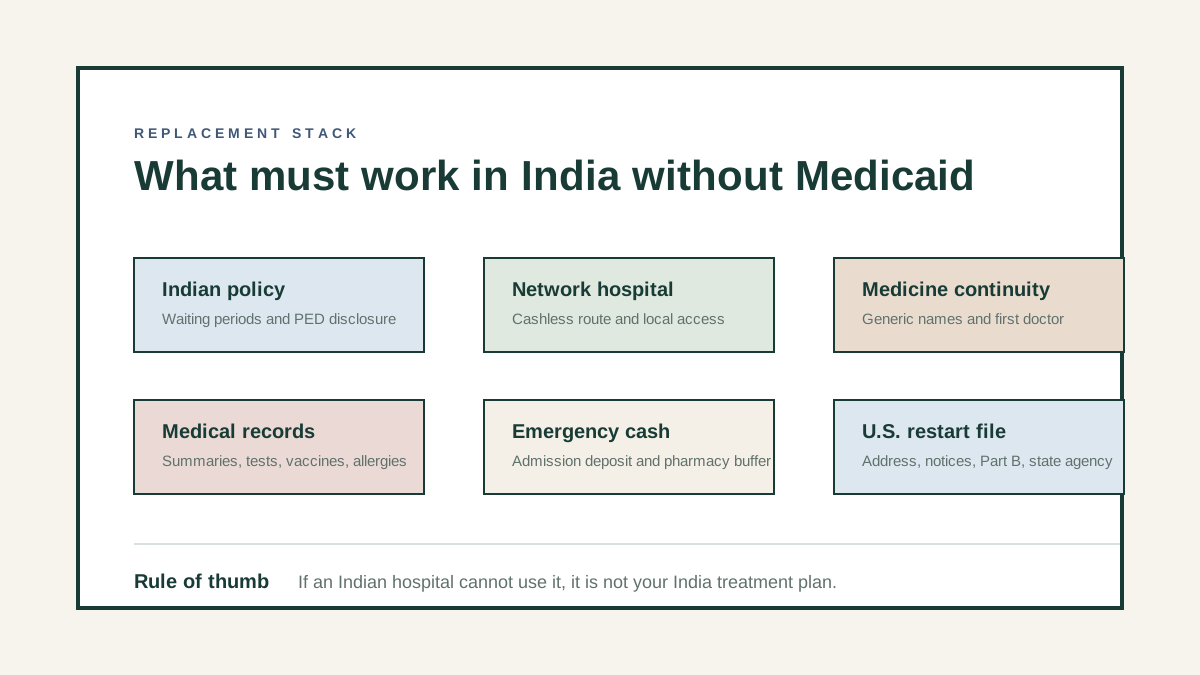
Nine-step workflow before moving to India with SSI, Medicaid, or Medicare
The goal is not to keep every benefit. The goal is to avoid overpayment, medical exposure, and a broken U.S. restart path.
Name every benefit separately
Write SSI, SSDI, Social Security retirement, survivors, Medicare Part A, Part B, Part D, Medicare Advantage, Medigap, Medicaid, SNAP, housing, and state waiver benefits on separate lines. One acronym mistake can change the entire answer.
Check whether the person receives SSI
If SSI is present, treat a long India stay as a red-alert item. Save SSA's outside-the-U.S. rule, report the move, and plan for payment suspension and possible 30-day return-presence requirements.
Screen Social Security or SSDI separately
Use SSA's payments-abroad path for retirement, survivors, or disability benefits. Do not use SSI rules to decide SSDI or retirement, and do not use retirement rules to decide SSI.
Call the state Medicaid agency before the move
Medicaid is state-administered. Ask what address, residency, absence, renewal, managed-care, long-term-care, or waiver facts must be reported, and save the agency response.
Model Medicare as a U.S. return runway
Decide whether Part B, Part D, Medicare Advantage, or Medigap should be kept for U.S. care access, not because they will pay routine India bills. Use the dedicated Medicare article for the deeper Part B and Part D analysis.
Build the India treatment stack
Choose Indian health insurance, map network hospitals, create a cash buffer, list current medicines by generic name, and identify the first India doctor before landing.
Protect account access and notices
SSA, Medicare, Medicaid, and state agencies may still send notices. Keep U.S. mail handling, online accounts, phone access, representative contacts, and uploaded documents working.
Write the overpayment prevention note
If a payment continues after eligibility changes, keep the money segregated until SSA or the agency confirms it is valid. Overpayments are easier to prevent than unwind from India.
Create a restart file
If the person returns to the United States, the file should already contain ID, U.S. address plan, medical records, benefit notices, suspension letters, bank records, and the agency contact path.
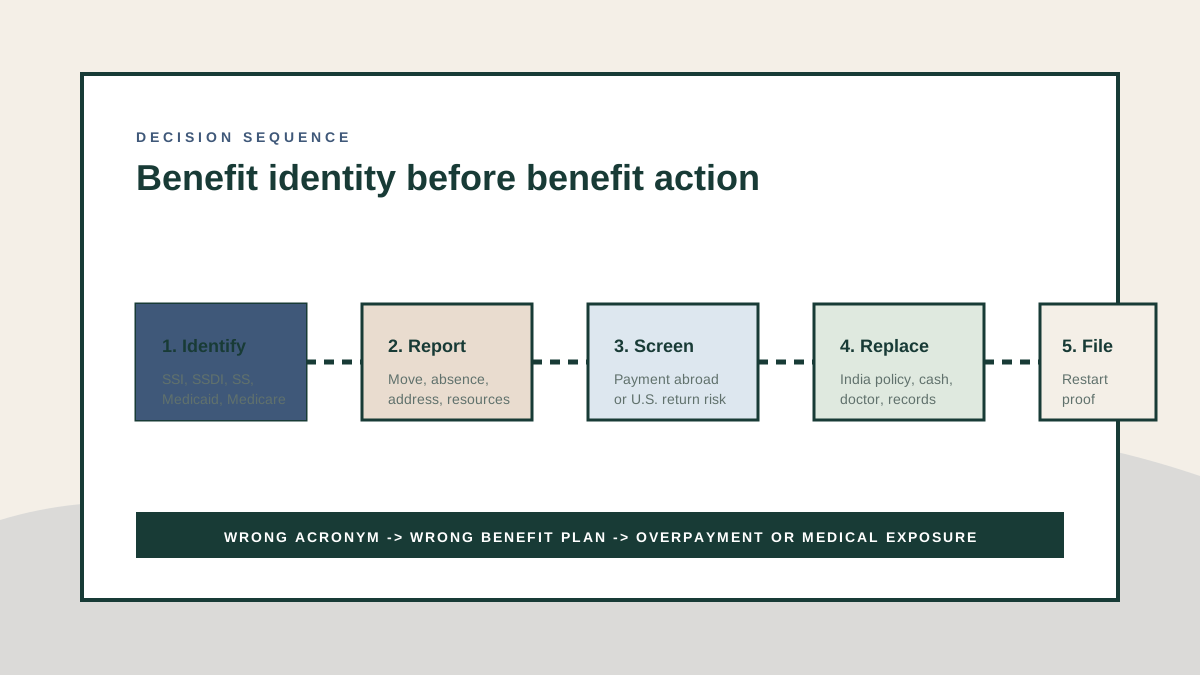
The proof file to build before the India move
Create one file per person. Do not mix a parent's SSI/Medicaid file with a spouse's Medicare or Social Security file.
- Current benefit award letters for SSI, SSDI, Social Security, Medicare, Medicaid, and any state waiver or managed-care plan.
- Travel and residence timeline: departure date, trial-stay dates, expected India address, and U.S. return plan.
- SSA notes: SSI reporting record, payments-abroad screening result, direct-deposit setup, and questionnaire calendar where relevant.
- Medicaid notes: state agency contact, address/residency answer, renewal deadline, managed-care card, and any waiver-service contact.
- Medicare notes: Part A, Part B, Part D, Medicare Advantage, Medigap, premium, penalty, and restart assumptions.
- India replacement cover: policy wording, hospital network, pre-existing-condition disclosure, waiting periods, emergency cash, and claim process.
- Medical transition file: diagnosis summaries, prescriptions with generic names, recent tests, vaccination record, and first India appointment.
- Family operating note: who reads mail, answers agency notices, pays bills, and can act if the benefit holder is hospitalized.

Visual: replace the missing health-cover lane before you land
Need help with Tax & Residency?
Share your blocker in one line. Our experts will reply with practical next steps.
Community signal: SSI travel questions often discover the 30-day rule late
"Reader questions cluster around one practical fear: whether a foreign stay becomes a benefit problem. The article answers that by separating SSI suspension risk from SSDI and Social Security payment-abroad screening."
Read on reddit ->Professional signal: benefit planning abroad starts with acronym cleanup
"Professional conversations around overseas suspensions repeatedly separate form handling, direct deposit, address records, and benefit type. That separation is the heart of this page."
Read on linkedin ->Short-form signal: Medicare abroad is often reduced to a yes/no answer
"Short videos often compress retirement abroad into one Social Security answer. The missing layer for returnees is Medicaid, SSI, SSDI, India replacement insurance, and U.S. restart planning."
Read on instagram ->Need help with Tax & Residency?
Share your blocker in one line. Our experts will reply with practical next steps.
X signal: people ask about SSI and Medicaid together
Unable to embed twitter content. View on twitter
"The common language pattern is SSI plus Medicaid plus living abroad. That is exactly why this article treats cash and health benefits as separate lanes."
Read on twitter ->Question signal: users search one bundle but need five answers
"Q&A searches often bundle SSI, Medicaid, Medicare, SSDI, and Social Security. The useful answer is not one yes/no; it is a lane-by-lane risk map."
Read on quora ->Decision diagram: do not let one U.S. benefit assumption carry the move
Need help with Tax & Residency?
Share your blocker in one line. Our experts will reply with practical next steps.
Do not spend a benefit payment that may become an overpayment
If SSI, Medicaid-linked support, or any state benefit continues after the move facts changed, do not treat it as safe income until the agency confirms the payment is valid. Keep the money segregated, save reporting proof, and get the case status in writing.
Interactive checkpoint
Turn this guide into a decision file
0 of 4 checked
Can I get SSI while living in India?
Generally no for a long India stay. SSA says a person is ineligible for SSI for any month during all of which the person is outside the United States, and once outside the United States for 30 consecutive days or longer, the person must generally be back in the United States for 30 consecutive days to be eligible again. Narrow exceptions can apply, so verify the exact case with SSA before travel.
Is SSI the same as Social Security retirement or SSDI?
No. SSI is a needs-based Supplemental Security Income program with U.S. presence and reporting rules. Social Security retirement, survivors, and SSDI are different benefit lanes that may be payable abroad depending on citizenship, country, benefit type, and SSA payment-abroad rules.
Does Medicaid cover medical care in India?
Do not plan on Medicaid paying Indian hospital bills. Medicaid is state-administered and tied to state eligibility. The U.S. State Department says U.S. Medicare and Medicaid do not pay for medical care outside the United States. Build a separate India health insurance and cash-care plan.
Does Medicare cover me after moving to India?
Medicare has limited foreign-care coverage and should not be treated as an India resident hospital plan. A separate Medicare article should be used to model Part B, Part D, Medicare Advantage, Medigap, and U.S. return risk.
What should a dual Medicare and Medicaid beneficiary do before moving to India?
Separate the two programs. Medicare decisions affect U.S. care access and penalty risk. Medicaid decisions depend on state eligibility, residency, renewal, and covered services. For India treatment, build a replacement health stack rather than relying on the dual card.
Can SSDI continue if I move to India?
It may be possible, but do not assume. Use SSA's payments-abroad guidance and screening tool for the exact person, citizenship, country, and benefit type. SSI and SSDI have different abroad rules.
What should I report before leaving the United States?
Report changes that affect SSI and other benefits, including travel or residence changes, address, living arrangement, income, resources, marital status, and institutional care where relevant. For Medicaid, contact the state agency and document the required reporting path.
What replaces Medicaid if I move to India?
Usually a mix of Indian health insurance, network hospital selection, emergency cash, prescription continuity, medical records, and family operating support. If a person may return to the U.S., keep a restart file for U.S. coverage and benefits.
Your tax year is already running.
RNOR status, exit timing, and DTAA benefits all depend on decisions you make before you land. Don't guess.