Nri Parent Indian Nps Tier-i Tier-ii Apy Section 80ccd(1b)...
Complete 2026 guide for NRI / OCI senior parents holding or inheriting Indian NPS (National Pension System) + Tier-I + Tier-II + APY (Atal Pension Yojana) — covering...
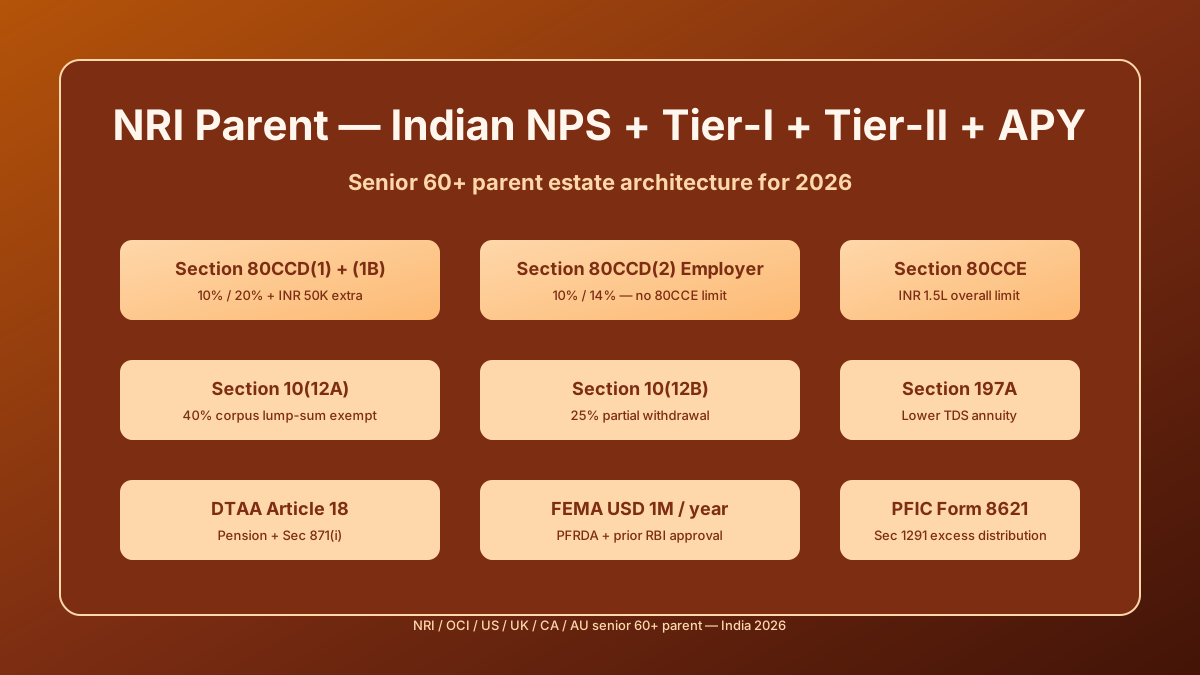
Critical: Indian NPS Tier-I + Tier-II + APY held by NRI / OCI senior 60+ parent — Section 80CCD(1) + 80CCD(1B) + 80CCD(2) + 80CCC + 80CCE INR 1.5 lakh limit + Section 10(12A) 40% corpus exempt + Section 10(12B) 25% partial withdrawal exempt + Section 197A lower TDS + DTAA + FEMA prior RBI approval for Tier-I continuation by NRI
Indian NPS (National Pension System) Tier-I mandatory lock-in until age 60 + NPS Tier-II voluntary withdrawable + APY (Atal Pension Yojana) guaranteed pension scheme held by NRI / OCI senior 60+ parent are classified as defined-contribution, PFRDA-regulated, eNPS-managed, PRAN-numbered pension schemes. Section 80CCD(1) employee / self-employed NPS Tier-I contribution up to 10% of salary (employee) / 20% of gross income (self-employed) — within Section 80CCE INR 1.5 lakh overall limit (with Section 80C + 80CCC + 80CCD(1)). Section 80CCD(1B) additional NPS Tier-I contribution up to INR 50,000 over and above Section 80CCE limit (dedicated NPS Tier-I contribution — NOT available to APY contribution per Section 80CCD(1B) proviso + CBDT Circular 6/2014 + 18/2015). Section 80CCD(2) employer NPS Tier-I contribution up to 10% of salary (or 14% for Central Government + State Government employees per Section 80CCD(2)(b) — no Section 80CCE limit, exclusive employer benefit). Section 80CCC annuity / pension fund contribution (within Section 80CCE INR 1.5 lakh limit — debated applicability for NPS Tier-I; typically Section 80CCC applies to LIC + other insurance company annuity plans NOT NPS). Section 80CCF infrastructure bond (debated — sunset in 2012-13 per Finance Act 2012 — limited application). Section 10(12A) NPS Tier-I lump-sum withdrawal at exit (age 60) up to 40% of corpus exempt from income tax (60% mandatory annuity purchase for non-government employee per Section 10(12A)(i) read with PFRDA Exit Regulations 2015; 100% lump-sum exempt for Central Government + State Government employee per Section 10(12A)(ii) read with Notification 24/2014). Section 10(12B) NPS Tier-I partial withdrawal up to 25% of employee contribution (NOT employer contribution) exempt after 3 years of NPS Tier-I account opening per PFRDA Regulations 2015 — for specific purposes (higher education of children + marriage of children + purchase / construction of residential house + medical treatment of specified diseases + self-incurring disability). Section 197A lower TDS certificate for NRI / OCI senior 60+ parent receiving NPS Tier-I lump-sum + annuity income — NRI / OCI can apply for lower TDS certificate to AO for annuity income per Section 197 + Form 13. DTAA Article 18 pension typically exempt in source country (India) + taxable in residence country (US / UK / CA / AU) — saving clause applies — Section 871(i) annuity recipient treaty for US person. FEMA USD 1M / year LRS per FEMA 1999 + RBI Master Direction 2024 + FEMA prior RBI approval for Tier-I continuation by NRI (NRI / OCI can continue NPS Tier-I after change of residential status per PFRDA Notification 2024 + FEMA 1999 + RBI Master Direction 2024 — debated — typically FEMA prior RBI approval + AD-1 bank + NRO PRAN account + Form A2 + FEMA compounding if not obtained).
NRI parent senior 60+ Indian NPS + Tier-I + Tier-II + APY — pension architecture for foreign investors
Indian NPS (National Pension System) Tier-I + Tier-II + APY (Atal Pension Yojana) held by NRI / OCI senior 60+ parent represents a deeply specialised defined-contribution, PFRDA-regulated, eNPS-managed, PRAN-numbered pension scheme class that combines long-term, lock-in-till-age-60 retirement-corpus accumulation with Section 80CCD(1) + 80CCD(1B) + 80CCD(2) tax-deductible contribution + Section 10(12A) 40% corpus exempt + Section 10(12B) 25% partial withdrawal exempt + Section 80CCE INR 1.5 lakh overall limit + Section 197A lower TDS + annuity-as-pension pay-out architecture. NPS Tier-I is the primary, mandatory-lock-in, retirement-corpus-accumulation account with PRAN (Permanent Retirement Account Number) issued by PFRDA through Central Recordkeeping Agency (CRA — NSDL e-Governance + Karvy e-Tech), managed by Pension Fund Manager (PFM — SBI Pension Fund + LIC Pension Fund + UTI Retirement Solutions + HDFC Pension + ICICI Prudential + Kotak Mahindra + Reliance Nippon + Aditya Birla Sun Life + Tata + Max Life), accessed through Point of Presence (PoP) — typically banks — and central government-subsidised for social-sector NPS Lite + corporate-sector NPS. NPS Tier-II is the voluntary, withdrawable, no-tax-benefit, savings-account-cum-pension-fund account available to NPS Tier-I subscribers, governed by PFRDA Tier-II Regulations 2015, typically used for short-term parking of funds without lock-in. APY (Atal Pension Yojana) is a guaranteed pension scheme for unorganised sector + Indian residents age 18-40 years, guaranteeing INR 1000-5000 per month pension for senior 60+ based on age of joining + contribution period, managed by PFRDA + NPS architecture + typically government-subsidised for weaker sections.
The tax-deduction architecture under Section 80CCD + 80CCC + 80CCE + 80CCF marks NPS Tier-I + annuity + infrastructure bond as the primary retirement-tax-planning vehicle for NRI / OCI senior 60+ parent. Section 80CCD(1) provides deduction for employee / self-employed NPS Tier-I contribution up to 10% of salary (employee — salary as defined in Section 17) or 20% of gross income (self-employed — gross total income before deductions) — within Section 80CCE INR 1.5 lakh overall limit (combined with Section 80C + 80CCC + 80CCD(1) + other Section 80CCD(1) variations). Section 80CCD(1B) provides additional deduction for NPS Tier-I contribution up to INR 50,000 over and above Section 80CCE limit (dedicated NPS Tier-I contribution — NOT available to APY contribution per Section 80CCD(1B) proviso + CBDT Circular 6/2014 + 18/2015; NOT available to Section 80C instruments; effectively the NPS Tier-I contribution can be up to INR 2 lakh total per financial year). Section 80CCD(2) provides deduction for employer NPS Tier-I contribution up to 10% of salary (employee) or 14% of salary (Central Government + State Government employee) per Section 80CCD(2)(b) — no Section 80CCE limit, exclusive employer benefit. Section 80CCC provides deduction for annuity / pension fund contribution (typically LIC + other insurance company annuity plans NOT NPS — NPS Tier-I is covered by Section 80CCD(1) + 80CCD(1B) separately). Section 80CCF provided deduction for infrastructure bond contribution (debated — sunset in 2012-13 per Finance Act 2012 — limited application; new infrastructure bonds typically not issued). Section 80CCE provides overall INR 1.5 lakh limit (combined with Section 80C + 80CCC + 80CCD(1)) — important to note that Section 80CCD(1B) + 80CCD(2) are OUTSIDE Section 80CCE limit.
Senior 60+ parent estate planning angle: Indian NPS Tier-I + APY units are critically different from mutual fund + direct equity + REIT/InvIT units because (a) NPS Tier-I is mandatory lock-in until age 60 — no early withdrawal except Section 10(12B) 25% partial withdrawal after 3 years for specific purposes + premature exit allowed for specific reasons (NRI status change + critical illness + permanent disability + non-reemployment + permanent departure from India per PFRDA Exit Regulations 2015); (b) NPS Tier-I at exit (age 60) requires 40% lump-sum withdrawal (exempt under Section 10(12A)) + 60% mandatory annuity purchase (taxable as income from salary / pension / other sources per Section 17 + Section 56 + Section 192 + Section 194 + Section 195 — annuity provider deducts TDS at applicable rate + DTAA rate if applicable + Section 197A lower TDS certificate if applicable); (c) APY at exit (age 60) provides guaranteed INR 1000-5000 per month pension for life (with spouse continuation at 50%) — annuity is fixed, return-guaranteed, government-backed per PFRDA Atal Pension Yojana Regulations 2015; (d) NPS Tier-I + APY units are held in PRAN (Permanent Retirement Account Number) account with CRA — nominee registration per PFRDA regulations + death benefits to nominee / legal heir — no inheritance transmission required for small amounts but for large amounts + foreign-resident nominee + nomination to multiple heirs, succession certificate / Will / probate / Letters of Administration may be required; (e) NPS Tier-I is taxed at three stages — contribution (Section 80CCD(1) + 80CCD(1B) + 80CCD(2) deduction), accumulation (Section 10(12A) exempt during accumulation phase), and exit (Section 10(12A) 40% corpus exempt + 60% annuity taxable); (f) US person children inheriting Indian NPS Tier-I + APY face PFIC Form 8621 (Indian NPS Tier-I is foreign mutual fund + 75% passive income for US tax per Section 1295 + Section 1296 + Section 1297 — QEF election rarely available; mark-to-market per Section 1296 may not apply if NPS Tier-I units are not regularly traded) + Form 8938 FATCA if foreign NPS Tier-I > USD 50K end-of-year (single / MFS) or > USD 300K end-of-year (MFJ) + FBAR FinCEN 114 if foreign account aggregate > USD 10K at any point during calendar year + Section 871(i) annuity recipient treaty for US person.
NRI parent senior 60+ — Indian NPS Tier-I + Tier-II + APY comparison
| Feature | NPS Tier-I | NPS Tier-II | APY (Atal Pension Yojana) |
|---|---|---|---|
| Regulator | PFRDA (Pension Fund Regulatory and Development Authority) Act 2013 + NPS Regulations 2015 | PFRDA + NPS Tier-II Regulations 2015 | PFRDA + Atal Pension Yojana Regulations 2015 |
| Eligibility | Indian resident age 18-70 (NRI / OCI can continue with FEMA prior RBI approval per PFRDA Notification 2024) | NPS Tier-I subscriber — typically Indian resident; NRI / OCI continued access debated | Indian resident age 18-40; NOT available to NRI / OCI (debated; typically APY subscriber must be Indian resident) |
| Lock-in | Mandatory until age 60 (with partial withdrawal + premature exit exceptions) | Voluntary, withdrawable, no lock-in | Mandatory until age 60 (guaranteed pension payout) |
| Section 80CCD(1) deduction | Yes — up to 10% of salary / 20% of gross income within Section 80CCE INR 1.5 lakh | No — Section 80CCD applies only to Tier-I | No — APY contribution NOT eligible per Section 80CCD(1B) proviso + CBDT Circular |
| Section 80CCD(1B) deduction | Yes — additional INR 50,000 over and above Section 80CCE limit | No | No — APY contribution NOT eligible |
| Section 80CCD(2) employer | Yes — up to 10% / 14% salary no Section 80CCE limit | No | No — APY is self-contribution only |
| Contribution minimum | INR 500 per month (tier-based) | INR 250 per month | INR 42-1454 per month (based on age + pension amount) |
| Investment choice | Active choice (E + C + G — Equity + Corporate Debt + Government Bond) or Auto choice (LC-25/50/75) | Active choice (similar to Tier-I) | Government of India fixed portfolio (debt-heavy) |
| Exit age | 60 years (premature exit: NRI status + critical illness + permanent disability) | Anytime | 60 years |
| Lump-sum at exit | Up to 40% exempt under Section 10(12A) — 60% mandatory annuity (non-government) | Full withdrawal allowed | No lump-sum — annuity only (INR 1000-5000 per month) |
| Partial withdrawal | Up to 25% of employee contribution after 3 years under Section 10(12B) | Anytime | Not allowed |
| Annuity | Mandatory 60% annuity purchase from ASP for non-government employee | Not applicable | Mandatory annuity from PFRDA-empanelled insurer (LIC + others) |
| Nomination / death benefit | PRAN nominee — PFRDA Form | PRAN nominee — PFRDA Form | Spouse continuation at 50% + nominee |
| PFM (Pension Fund Manager) | SBI + LIC + UTI + HDFC + ICICI + Kotak + Reliance + Aditya Birla + Tata + Max Life | Same as Tier-I | Government of India fixed (LIC + SBI Pension typically) |
| ASP (Annuity Service Provider) | LIC + SBI Life + HDFC Life + ICICI Prudential Life + Max Life + Bajaj Allianz + TATA AIA + Reliance Nippon + Aditya Birla Sun Life | Not applicable | Same as Tier-I annuity providers |
| FEMA USD 1M / year repatriation | Allowed per RBI Master Direction 2024 + PFRDA + Section 195 NRI TDS + Section 197A lower TDS + DTAA rate + Form 67 | Allowed per RBI Master Direction 2024 + Section 195 NRI TDS + Section 197A lower TDS + DTAA rate + Form 67 | Debated — APY repatriation typically not applicable as APY is government pension + Indian rupee-denominated |
| Section 871(i) US annuity recipient treaty | Yes — applies to annuity portion of NPS Tier-I exit + APY annuity | Not applicable (no annuity) | Yes — applies to APY annuity |
| PFIC Form 8621 US tax | Yes — typically PFIC for US tax (Section 1295 + Section 1296 + Section 1297) | Yes — typically PFIC for US tax | Yes — typically PFIC for US tax |
| Form 8938 FATCA | Yes — if foreign NPS Tier-I > USD 50K / USD 300K | Yes — if foreign NPS Tier-II > USD 50K / USD 300K | Yes — if foreign APY > USD 50K / USD 300K |
| FBAR FinCEN 114 | Yes — if foreign account aggregate > USD 10K | Yes — if foreign account aggregate > USD 10K | Yes — if foreign account aggregate > USD 10K |
| Senior 60+ parent suitability | Yes — long-term retirement + tax deduction + annuity | Yes — short-term parking + no tax benefit | Yes — guaranteed pension for unorganised sector + government-subsidised |
NRI parent senior 60+ Indian NPS Tier-I + Tier-II + APY architecture
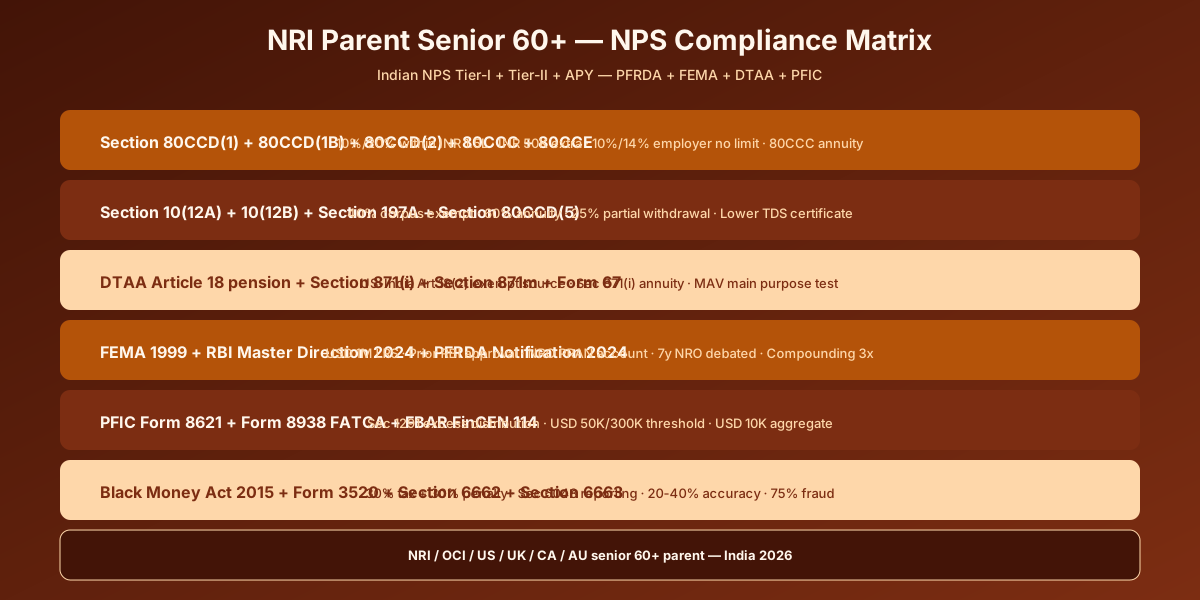
Section 80CCD + 80CCC + 80CCE + 80CCF + Section 10(12A) + 10(12B) + Section 197A lower TDS for NPS Tier-I + APY distribution
The tax-deduction architecture for NRI / OCI senior 60+ parent contributing to Indian NPS Tier-I is layered. Section 80CCD(1)(a) employee NPS Tier-I contribution deduction up to 10% of salary (basic + DA + commission / fixed percentage as per terms of employment) per Section 17 salary definition — within Section 80CCE INR 1.5 lakh overall limit (combined with Section 80C + 80CCC + 80CCD(1) + Section 80CCD(1) variations). Section 80CCD(1)(b) self-employed NPS Tier-I contribution deduction up to 20% of gross total income (before Section 80CCD + 80C deductions) — within Section 80CCE INR 1.5 lakh overall limit. Section 80CCD(1B) additional NPS Tier-I contribution deduction up to INR 50,000 — OVER AND ABOVE Section 80CCE limit (dedicated NPS Tier-I contribution per Section 80CCD(1B) — NOT available to APY contribution per Section 80CCD(1B) proviso + CBDT Circular 6/2014 + 18/2015; effectively the NPS Tier-I contribution can be up to INR 2 lakh total per financial year for an employee + INR 1.5 lakh + 50000 = INR 2 lakh total per financial year for self-employed). Section 80CCD(2)(a) employer NPS Tier-I contribution deduction up to 10% of salary (employee from private sector employer + public sector employer other than Central / State Government) per Section 36(1)(iv) + Section 80CCD(2) — NO Section 80CCE limit (exclusive employer benefit). Section 80CCD(2)(b) employer NPS Tier-I contribution deduction up to 14% of salary (Central Government + State Government employee only) — NO Section 80CCE limit. Section 80CCC annuity / pension fund contribution deduction within Section 80CCE INR 1.5 lakh limit — applies to LIC + other insurance company annuity plans (Jeevan Akshay + New Jeevan Tarang + LIC Annuity Plans), NOT NPS Tier-I (which is covered by Section 80CCD(1) + 80CCD(1B) separately).
Exit taxation architecture for NRI / OCI senior 60+ parent exiting NPS Tier-I at age 60: Section 10(12A)(i) NPS Tier-I lump-sum withdrawal up to 40% of corpus EXEMPT from income tax (60% mandatory annuity purchase from ASP — Annuity Service Provider — for non-government employee per PFRDA Exit Regulations 2015 — annuity income from ASP is taxable as income from other sources / salary / pension per Section 17 / Section 56 + ASP deducts TDS at applicable rate + Section 192 + Section 194 + Section 195 NRI TDS + Section 197A lower TDS certificate + DTAA rate if applicable + Form 67). Section 10(12A)(ii) NPS Tier-I lump-sum withdrawal 100% EXEMPT for Central Government + State Government employee (no mandatory annuity purchase) — for non-government employee, 40% lump-sum exempt + 60% mandatory annuity. Section 10(12B) NPS Tier-I partial withdrawal up to 25% of employee contribution (NOT employer contribution) EXEMPT — after 3 years of NPS Tier-I account opening per PFRDA Regulations 2015 — for specific purposes (higher education of children + marriage of children + purchase / construction of residential house subject to lock-in / pre-conditions + medical treatment of specified diseases per Section 80DDB + 17 critical illnesses + self-incurring disability + some specific circumstances). Section 80CCD(5) employer contribution to NPS Tier-I is EXEMPT under Section 17 (employer contribution treated as salary + exempt to the extent of Section 80CCD(2) deduction + Section 10(12A) at exit).
APY (Atal Pension Yojana) at exit (age 60): guaranteed INR 1000-5000 per month pension for life + spouse continuation at 50% (if subscriber dies, spouse receives 50% of original pension amount) + return of corpus to nominee upon death of subscriber + spouse per PFRDA Atal Pension Yojana Regulations 2015. APY annuity is taxable as income from other sources / salary / pension per Section 17 / Section 56 + ASP (typically LIC) deducts TDS at applicable rate + Section 192 + Section 194 + Section 195 NRI TDS — NRI / OCI senior 60+ parent can claim Section 197A lower TDS certificate from AO for APY annuity + Section 197 lower-rate certificate + Form 13 + Form 67 mandatory + DTAA rate if applicable per India-USA DTAA Article 18 pension (typically exempt in source country + taxable in residence country + saving clause applies + Section 871(i) annuity recipient treaty for US person + Section 7701(b) treaty tie-breaker + Form 8833 treaty disclosure + Section 6114 + 25% treaty penalty). Note: Section 80CCD(1) deduction is NOT available to APY contribution per Section 80CCD(1B) proviso + CBDT Circular 6/2014 + 18/2015 — APY contribution is a separate government-subsidised pension scheme outside the Section 80CCD + 80CCE architecture. The combined NPS Tier-I + APY + Section 80CCD(1) + 80CCD(1B) + 80CCD(2) + Section 10(12A) + 10(12B) + Section 197A lower TDS + DTAA + FEMA USD 1M / year + PFIC Form 8621 + Section 871(i) + Form 8938 FATCA + FBAR FinCEN 114 framework forms the comprehensive NRI / OCI senior 60+ parent NPS estate architecture.
NRI parent senior 60+ — Indian NPS Tier-I + Tier-II + APY subscription flow (8 steps)
Step 1 — Open PRAN (Permanent Retirement Account Number) via eNPS or Point of Presence (PoP) bank
NRI / OCI senior 60+ parent must open PRAN (Permanent Retirement Account Number) account with PFRDA via Central Recordkeeping Agency (CRA — NSDL e-Governance + Karvy e-Tech) through eNPS (electronic NPS) portal https://enps.nsdl.com/ or through Point of Presence (PoP) bank branch. KYC documents include passport + visa + PIO / OCI card + PAN + Aadhaar (if available) + Indian address proof + FEMA 1999 declaration + FEMA prior RBI approval for Tier-I continuation by NRI per PFRDA Notification 2024 + AD-1 bank + Form A2. For NPS Tier-II, the NRI / OCI must first open NPS Tier-I and then apply for NPS Tier-II activation through eNPS + PoP bank + CRA + KYC. For APY, NRI / OCI is typically not eligible (APY is for Indian resident age 18-40 — but senior 60+ parent with prior APY subscription as Indian resident before moving abroad can continue APY per PFRDA Notification 2024 debated).
Step 2 — Choose NPS Tier-I investment choice — Active choice (E + C + G) or Auto choice (LC-25/50/75)
NRI / OCI senior 60+ parent must choose NPS Tier-I investment choice — (a) Active choice — explicit allocation across E (Equity — up to 75% for active subscribers; 50% max for subscribers above 50 years; 0% for subscribers above 60 years per PFRDA Notification 2019), C (Corporate Debt — up to 100%), G (Government Bond — up to 100%) per PFM selection; or (b) Auto choice — Life-Cycle based default allocation — LC-25 (Equity 25% max throughout), LC-50 (Equity 50% max reducing with age), LC-75 (Equity 75% max reducing with age) per PFRDA Notification 2015 + PFM default. Choose Pension Fund Manager (PFM) — SBI Pension Fund + LIC Pension Fund + UTI Retirement Solutions + HDFC Pension + ICICI Prudential Pension + Kotak Mahindra + Reliance Nippon + Aditya Birla Sun Life + Tata + Max Life — typically chosen at PRAN account opening + can change PFM once per financial year per PFRDA Regulations 2015.
Step 3 — Contribute NPS Tier-I per Section 80CCD(1) + 80CCD(1B) + 80CCD(2) + claim deduction in ITR
NRI / OCI senior 60+ parent must contribute NPS Tier-I minimum INR 500 per month (or INR 1000-100000 per month tier-based) + Section 80CCD(1) employee / self-employed contribution up to 10% of salary / 20% of gross income (within Section 80CCE INR 1.5 lakh limit) + Section 80CCD(1B) additional contribution up to INR 50,000 (over and above Section 80CCE limit) + Section 80CCD(2) employer contribution up to 10% of salary (no Section 80CCE limit). Claim deduction in ITR-1 / ITR-2 / ITR-3 per Section 139(1) due date 31 July (audit 31 October) — schedule VI deductions — Section 80CCD(1) + 80CCD(1B) + 80CCD(2) breakdown — Section 80CCE overall limit calculation — supporting documents (PRAN acknowledgment + Tier-I statement + employer contribution Form 16 + salary slip + Section 80CCD(1B) declaration).
Step 4 — Receive distribution per Section 10(12A) at age 60 — 40% corpus exempt + 60% mandatory annuity
At age 60, NRI / OCI senior 60+ parent submits NPS Tier-I exit application to PoP + CRA + PFM + ASP per PFRDA Exit Regulations 2015. Choose: (a) 40% lump-sum withdrawal EXEMPT under Section 10(12A)(i) — for non-government employee + (b) 60% mandatory annuity purchase from ASP (Annuity Service Provider — LIC + SBI Life + HDFC Life + ICICI Prudential Life + Max Life + Bajaj Allianz + TATA AIA + Reliance Nippon + Aditya Birla Sun Life) — annuity income is taxable as income from other sources / salary / pension per Section 17 / Section 56 + ASP deducts TDS at applicable rate + Section 192 + Section 194 + Section 195 NRI TDS + Section 197A lower TDS certificate + DTAA rate + Form 67. For Central Government + State Government employee, 100% lump-sum EXEMPT under Section 10(12A)(ii) per Notification 24/2014 — no mandatory annuity. ASP issues Form 16A + annuity certificate + TDS certificate.
Step 5 — Partial withdrawal per Section 10(12B) — 25% of employee contribution after 3 years
NRI / OCI senior 60+ parent can submit NPS Tier-I partial withdrawal application per PFRDA Regulations 2015 + Section 10(12B) — up to 25% of employee contribution (NOT employer contribution) EXEMPT — after 3 years of NPS Tier-I account opening — for specific purposes (higher education of children + marriage of children + purchase / construction of residential house subject to lock-in / pre-conditions + medical treatment of specified diseases per Section 80DDB + 17 critical illnesses + self-incurring disability + some specific circumstances). Partial withdrawal application is processed by PoP + CRA + PFM — typically within 7-15 days — fund credited to NRI / OCI bank account + Section 10(12B) exemption per Section 10(12B)(i) + Section 10(12B)(ii) for medical purposes + employer Form 16 + ITR claim.
Step 6 — Annuity income + Section 197A lower TDS certificate + DTAA + Form 67 + Sec 90(4) 8y TRC
NRI / OCI senior 60+ parent receiving annuity income from ASP must declare in ITR-2 / ITR-3 per Section 139(1) due date 31 July (audit 31 October) + claim Section 197A lower TDS certificate from AO for ASP to deduct TDS at lower rate per Section 197 + Form 13 + Section 197 certificate specifying lower rate + ASP must honour certificate. Alternatively, claim DTAA rate per Section 90 / 91 + TRC + Form 67 mandatory per CBDT Notification 3/2022 + Circular 11/2022 + 12/2022 stricter rules + Section 90(4) 8-year TRC retention. DTAA Article 18 pension typically exempt in source country + taxable in residence country per India-USA DTAA Article 18(2) — saving clause applies — Section 871(i) annuity recipient treaty for US person + Section 7701(b) treaty tie-breaker + Form 8833 treaty disclosure + Section 6114 + 25% treaty penalty + Estate Tax Treaty + Gift Tax Treaty.
Step 7 — FEMA USD 1M / year + Section 195 NRI TDS + repatriation per RBI Circular 47/2015 + 12/2015
NRI / OCI senior 60+ parent receiving NPS Tier-I lump-sum + annuity + partial withdrawal can repatriate per FEMA USD 1M / year LRS per FEMA 1999 + RBI Master Direction 2024 + Form A2 + AD-1 bank + certificate from ASP / CRA / PFM + FEMA compliance certificate from CA + 26QB / 26QC (if applicable) + Form 15CB (CA certificate) + Form 15CA (declarant statement) + 26Q + 27Q TDS return verification. Section 195 NRI TDS at applicable rate + Section 197A lower TDS certificate + DTAA rate + Section 90(4) 8-year TRC retention + Form 67 mandatory. Note: NPS Tier-I annuity may have specific FEMA treatment — typically repatriable after tax + FEMA compliance — debated — typically 7-year NRO retention debate similar to mutual fund + direct equity + REIT/InvIT (per RBI Circular 47/2015 + 12/2015 + FEMA 1999 + RBI Master Direction 2024 — for NPS Tier-I held as NRI account, repatriation is typically allowed after tax + TDS + FEMA compliance).
Step 8 — Inheritance transmission — Section 56(2)(vii) FULL EXEMPT heir + nominee + PFIC Form 8621 + Form 8938 FATCA + FBAR FinCEN 114 + Section 871(i)
On death of NRI / OCI senior 60+ parent, NPS Tier-I + APY annuity corpus is transmitted to nominee per PRAN nomination + PFRDA Form + death certificate + nominee registration — small amounts (typically below INR 5 lakh) are paid to nominee directly without succession certificate / Will / probate / Letters of Administration per PFRDA Notification 2017; large amounts require succession certificate / Will / probate / Letters of Administration as applicable. Section 56(2)(vii) FULL EXEMPT heir receiving NPS Tier-I + APY annuity corpus from specified relative (deceased parent is 'specified relative' per Section 56(2)(vii)(b) Explanation) — no deemed gift tax. Cost of acquisition to heir is typically the corpus value at inheritance per Section 49(1) read with Section 55(2). US person child inheriting NPS Tier-I + APY face Form 8938 FATCA if foreign NPS Tier-I > USD 50K end-of-year (single / MFS) or > USD 300K end-of-year (MFJ) + FBAR FinCEN 114 if foreign account aggregate > USD 10K at any point during calendar year + PFIC Form 8621 (Indian NPS Tier-I is foreign mutual fund + 75% passive income for US tax per Section 1295 + Section 1296 + Section 1297 — QEF election rarely available; mark-to-market per Section 1296 may not apply if NPS Tier-I units are not regularly traded) + Section 871(i) annuity recipient treaty for US person + Form 3520 + Form 3520-A + Estate Tax Treaty + Gift Tax Treaty + MAV main purpose test + Section 7701(b) treaty tie-breaker + FEMA NRO 7-year retention debated.
Need help with this?
Share your blocker in one line. Our experts will reply with practical next steps.
NRI parent senior 60+ — NPS Tier-I + APY + Section 80CCD(1) + 80CCD(1B) + 80CCD(2) + Section 10(12A) + 10(12B) + Section 197A lower TDS flow
FEMA USD 1M / year + FEMA FPI + FEMA prior RBI approval for NRI Tier-I continuation + 7y NRO retention + FEMA compounding for NPS Tier-I + APY
FEMA 1999 + RBI Master Direction 2024 framework for NRI / OCI senior 60+ parent holding Indian NPS Tier-I + APY is layered. NPS Tier-I is typically held as NRO PRAN account (NPS Tier-I NRI account) per PFRDA Notification 2024 — NRI / OCI can continue NPS Tier-I after change of residential status from Indian resident to NRI / OCI per FEMA 1999 + RBI Master Direction 2024 + PFRDA Notification 2024 — requires FEMA prior RBI approval + AD-1 bank + Form A2 + PFRDA Form + KYC + FEMA compliance certificate from CA + FEMA compounding if not obtained. The NPS Tier-I NRI account is held in NRO bank account + NRO PRAN account — contributions from NRE / NRO bank accounts — repatriation of NPS Tier-I lump-sum + annuity corpus typically treated as current income per RBI Circular 47/2015 + 12/2015 + FEMA 1999 + RBI Master Direction 2024 — 7-year NRO retention debate typically NOT applicable for NPS Tier-I held as NRI account.
Liberalised Remittance Scheme (LRS) USD 1M / year: NRI / OCI senior 60+ parent can remit up to USD 1M per financial year per FEMA 1999 + RBI Master Direction 2024 — for current account transactions (private visit + gift + donation + emigration + maintenance of close relative + business trip + medical treatment + studies abroad) + capital account transactions (acquisition of immovable property outside India + investment in shares + securities + units of business trust outside India + opening of foreign currency account outside India) — through AD-1 bank + Form A2 (Liberalised Remittance Scheme) + PAN + Aadhaar (if available) + FEMA 1999 declaration + KYC. For NPS Tier-I lump-sum + annuity corpus repatriation, the LRS limit may apply if remitting the net proceeds after capital gains tax + TDS to a foreign bank account — but for NPS Tier-I held as NRI account, the corpus is typically treated as current income and can be repatriated immediately per RBI Circular 47/2015 + 12/2015 (debated — typically allowed after tax + TDS + FEMA compliance).
FEMA compounding penalty up to 3x per FEMA 1999 Section 13 may apply for non-compliance — FEMA compounding application to RBI ED per FEMA 1999 Section 13(1) + FEMA compounding order per FEMA 1999 Section 13(2) + FEMA compounding circular FEMA 2017 + FEMA compounding rate per FEMA compounding master direction + FEMA compounding penalty up to 3x of the amount involved. 7-year NRO retention + 10-year US/UK/CA/AU retention debate for NPS Tier-I + APY: For NRI / OCI inheriting Indian NPS Tier-I + APY from a resident Indian deceased, the inheritance transmission is typically treated as 'gift' from the deceased to the NRI / OCI heir under FEMA 1999 — Section 56(2)(vii) FULL EXEMPT the heir receiving NPS Tier-I + APY corpus from a specified relative (deceased parent is 'specified relative' per Section 56(2)(vii)(b) Explanation). The inheritance is typically retained in NRO PRAN account + NRO bank account — corpus repatriated after 7-year NRO retention per FEMA 1999 + RBI Master Direction 2024 — but for NPS Tier-I held as NRI account (debated — typically NOT applicable for NPS Tier-I NRI account).
NRI parent senior 60+ — FEMA USD 1M / year + FEMA prior RBI approval for NPS Tier-I continuation flow (8 steps)
Step 1 — Determine FEMA route — NRI / OCI continuation of NPS Tier-I + FEMA prior RBI approval
NRI / OCI senior 60+ parent must determine FEMA route for NPS Tier-I continuation — (a) Indian resident NPS Tier-I account converted to NRI / OCI NPS Tier-I account per PFRDA Notification 2024 + FEMA 1999 + RBI Master Direction 2024 — typically requires FEMA prior RBI approval + AD-1 bank + Form A2 + PFRDA Form + KYC; or (b) New NPS Tier-I account opened after becoming NRI / OCI per PFRDA Notification 2024 — debated — typically FEMA prior RBI approval required + AD-1 bank + Form A2 + PFRDA Form + KYC. Note: APY (Atal Pension Yojana) is typically NOT available to NRI / OCI (debated — APY subscriber must be Indian resident age 18-40; senior 60+ parent with prior APY subscription as Indian resident before moving abroad can continue APY per PFRDA Notification 2024 debated).
Step 2 — Open NRE / NRO bank account + NRO PRAN account + AD-1 + KYC + FEMA declaration
Open NRE / NRO bank account with AD-1 (Authorised Dealer) bank + KYC documents (passport + visa + PIO / OCI card + PAN + Indian address proof + FEMA declaration) + Form A2 (Liberalised Remittance Scheme) + NRO PRAN account with CRA (NSDL e-Governance + Karvy e-Tech) per PFRDA Notification 2024. The NRO PRAN account holds NPS Tier-I units as NRI account — contributions from NRE / NRO bank accounts — NPS Tier-I corpus held in NRO PRAN account.
Step 3 — FEMA prior RBI approval for NPS Tier-I continuation (if applicable)
Apply for FEMA prior RBI approval per FEMA 1999 + RBI Master Direction 2024 + PFRDA Notification 2024 for NPS Tier-I continuation by NRI / OCI — typically through AD-1 bank + RBI ED + FEMA approval letter + PFRDA + CRA + PFM. Required documents: passport + visa + PIO / OCI card + PAN + Indian address proof + FEMA 1999 declaration + NPS Tier-I PRAN + Form A2 + FEMA compliance certificate from CA + KYC. FEMA approval typically valid for 5 years + renewal required per FEMA 1999 + RBI Master Direction 2024.
Step 4 — Contribute NPS Tier-I per FEMA route + Section 80CCD(1) + 80CCD(1B) deduction
Contribute NPS Tier-I from NRE / NRO bank account per FEMA USD 1M / year LRS per FEMA 1999 + RBI Master Direction 2024 + Form A2 + AD-1 bank + FEMA 1999 declaration + Form 15CB (CA certificate) + Form 15CA (declarant statement) if foreign remittance. Section 80CCD(1) employee / self-employed NPS Tier-I contribution up to 10% of salary / 20% of gross income (within Section 80CCE INR 1.5 lakh limit) + Section 80CCD(1B) additional INR 50,000 (over and above Section 80CCE limit) + Section 80CCD(2) employer contribution up to 10% of salary (no Section 80CCE limit).
Step 5 — Hold NPS Tier-I in NRO PRAN account + nominate per PFRDA + eNPS
Hold NPS Tier-I in NRO PRAN account with CRA per FEMA route + nominate per PFRDA Form + PFRDA Regulations 2015 + Section 80CCD(1B) declaration + eNPS online access. Nomination is critical for inheritance transmission — without nomination, the NPS Tier-I corpus goes through succession certificate / Will / probate / Letters of Administration process which can take 6-24 months + significant cost.
Step 6 — Exit NPS Tier-I at age 60 — 40% lump-sum Sec 10(12A) exempt + 60% annuity ASP
At age 60, NRI / OCI senior 60+ parent submits NPS Tier-I exit application to PoP + CRA + PFM + ASP per PFRDA Exit Regulations 2015. Choose: (a) 40% lump-sum withdrawal EXEMPT under Section 10(12A)(i) — for non-government employee + (b) 60% mandatory annuity purchase from ASP (Annuity Service Provider). Section 195 NRI TDS + Section 197A lower TDS certificate + DTAA rate + Form 67 mandatory + Section 90(4) 8-year TRC retention. ASP issues Form 16A + annuity certificate + TDS certificate.
Step 7 — Repatriate NPS Tier-I corpus + annuity income per FEMA USD 1M / year LRS
Repatriate NPS Tier-I corpus + annuity income per FEMA USD 1M / year LRS per FEMA 1999 + RBI Master Direction 2024 + RBI Circular 47/2015 + 12/2015 + AD-1 bank + Form A2 + certificate from ASP / CRA / PFM + FEMA compliance certificate from CA + 26QB / 26QC (if applicable) + Form 15CB (CA certificate) + Form 15CA (declarant statement) + 26Q + 27Q TDS return verification. Note: NPS Tier-I annuity may have specific FEMA treatment — typically repatriable after tax + FEMA compliance per RBI Circular 47/2015 + 12/2015.
Step 8 — FEMA compounding if non-compliance + FEMA retention + 7y NRO debated
If FEMA non-compliance (e.g. FEMA prior RBI approval not obtained for NPS Tier-I continuation + FEMA FPI route not registered + FEMA PIS route not opened) — FEMA compounding penalty up to 3x per FEMA 1999 Section 13 + FEMA compounding application to RBI ED per FEMA 1999 Section 13(1) + FEMA compounding order per FEMA 1999 Section 13(2) + FEMA compounding circular FEMA 2017 + FEMA compounding rate per FEMA compounding master direction + FEMA compounding penalty up to 3x of the amount involved. 7-year NRO retention for inherited NPS Tier-I + APY corpus is debated — typically NOT applicable for NPS Tier-I held as NRI account per RBI Circular 47/2015 + 12/2015 + FEMA 1999 + RBI Master Direction 2024.
DTAA Article 18 pension + Article 11 interest + Section 197A lower TDS + Form 67 + Section 90(4) 8-year TRC retention for NPS Tier-I + APY annuity
DTAA Article 18 pension: India-USA DTAA Article 18(2) — pension derived by a resident of the US from India in consideration of past employment is taxable ONLY in the US (exempt in India per Article 18(2) + saving clause applies — US person NRI / OCI is subject to US tax on worldwide income including Indian NPS Tier-I + APY annuity). India-UK DTAA Article 18 — typically similar (exempt in source country + taxable in residence country + saving clause applies); India-CA DTAA Article 18 — typically similar; India-AU DTAA Article 18 — typically similar. Section 871(i) annuity recipient treaty for US person: Section 871(i) provides that annuities received from a US person payor by a non-resident alien individual are exempt from US tax (withholding tax exemption) — typically applies to US person NRI / OCI receiving annuity from US payer; for Indian NPS Tier-I + APY annuity received by US person, Section 871(i) typically does NOT apply as the payer is Indian (ASP), not US person. However, DTAA Article 18 may provide source-country exemption — for US person receiving Indian NPS Tier-I + APY annuity, India may exempt the annuity per DTAA Article 18(2) — NRI / OCI must claim DTAA rate by filing Form 67 + TRC + Section 90(4) 8-year retention + ASP honours DTAA rate + ASP deducts TDS at DTAA rate (typically 0% for pension per DTAA Article 18(2) — saving clause applies — but for non-government employee, the annuity is taxable in India per DTAA Article 18(2) — typically 0% withholding for pension from India per India-USA DTAA Article 18(2) — but for non-DTAA country + non-government employee, the annuity is taxable in India at 30% + 4% cess = 31.2%).
Section 197A lower TDS certificate for NPS Tier-I + APY annuity: NRI / OCI senior 60+ parent can apply for Section 197A lower TDS certificate from AO for ASP to deduct TDS at lower rate per Section 197 + Form 13 + Section 197 certificate specifying lower rate + ASP must honour certificate. Section 197A lower TDS certificate is typically applicable for NRI / OCI receiving interest + dividend + royalty + fees for technical services + other specified income per Section 197A(1A) — for NPS Tier-I + APY annuity, the application is typically under Section 197 (not 197A) for non-specified income + AO considers the lower rate based on DTAA + Section 90(4) 8-year TRC retention + Form 67 mandatory. Section 197 certificate is typically valid for 1-2 years per Section 197(2) + Section 197(3) — NRI / OCI must reapply for renewal.
Form 67 mandatory per CBDT Notification 3/2022 + Circular 11/2022 + 12/2022 stricter rules — NRI / OCI must file Form 67 (acknowledgment) before ITR filing if claiming DTAA rate lower than domestic rate — Form 67 includes TRC + DTAA Article reference + MAV documentation + saving clause documentation + main purpose test + Form 8833 treaty disclosure (US person only — Section 6114 + 25% treaty penalty + Section 7701(b) treaty tie-breaker). Section 90(4) 8-year retention: TRC must be retained for 8 years from end of assessment year — Form 67 must be filed + TRC submitted to AO on demand + Section 90(5) limitation of benefits documentation. Section 90(5) limitation of benefits + MAV main purpose test + panchnama if AO suspects non-genuine treaty claim. Estate Tax Treaty + Gift Tax Treaty + MAV main purpose test + Section 7701(b) treaty tie-breaker for inheritance planning.
NRI parent senior 60+ — DTAA Article 18 pension + Section 197A lower TDS + Form 67 + Section 90(4) 8-year TRC retention
Need help with this?
Share your blocker in one line. Our experts will reply with practical next steps.
PFIC Form 8621 + Section 871(i) + Section 871m + Form 8938 FATCA + FBAR FinCEN 114 + Form 3520 + US estate tax + Section 877A for NPS Tier-I + APY
PFIC Form 8621: Indian NPS Tier-I + Tier-II + APY is typically treated as PFIC (Passive Foreign Investment Company) for US tax per Section 1295 + Section 1296 + Section 1297 — Indian NPS Tier-I + Tier-II + APY is a foreign mutual fund + 75% or more of gross income is passive (interest + dividend + capital gains from PFM-managed portfolio) + 50% or more of assets produce passive income. PFIC consequences: (a) Section 1291 excess distribution regime — excess distribution (distribution > 125% of average distribution over prior 3 years) taxed at highest ordinary income rate + interest charge + capital gains treatment denied; (b) Section 1295 QEF (Qualified Electing Fund) election — NRI / OCI must obtain PFIC annual information statement from Indian PFM (rarely provided — PFM typically does not provide PFIC annual information statement as it is not required under Indian law); (c) Section 1296 mark-to-market election — NRI / OCI marks NPS Tier-I + Tier-II + APY units to market at year-end + capital gain / loss treated as ordinary — but NPS Tier-I + Tier-II + APY units must be 'marketable' (regularly traded on a qualified exchange) — NPS Tier-I + Tier-II + APY units are NOT regularly traded on a qualified exchange (PRAN account is not a qualified exchange) — Section 1296 election typically NOT applicable for NPS Tier-I + Tier-II + APY. Form 8621 annual filing + Section 1295 QEF election or Section 1296 mark-to-market election or Section 1291 excess distribution regime + Section 1297(e) CFC-PFIC overlap coordination + Section 1298 CFC + PFIC + Section 1291 excess distribution + Section 1291(c)(2) rollover + Section 1291(d) basis adjustment.
Section 871(i) + Section 871m: Section 871(i) provides that annuities received from a US person payor by a non-resident alien individual are exempt from US tax (withholding tax exemption) — typically applies to US person NRI / OCI receiving annuity from US payer; for Indian NPS Tier-I + APY annuity received by US person, Section 871(i) typically does NOT apply as the payer is Indian (ASP), not US person. Section 871m provides that US person receiving payments from a foreign person that are contingent on US-source equity derivatives may be subject to US withholding tax — typically applies to equity-linked notes + equity derivatives + dividend equivalents — for Indian NPS Tier-I + APY annuity, Section 871m typically NOT applicable as the annuity is from debt-heavy portfolio (Government Bond + Corporate Debt + minimal equity per PFM allocation).
Form 8938 FATCA: US person NRI / OCI senior 60+ parent holding Indian NPS Tier-I + Tier-II + APY corpus must file Form 8938 Statement of Specified Foreign Financial Assets per Section 6038D + Section 6038D-5 + Form 8938 + Section 6662 20-40% accuracy penalty + Section 6663 75% fraud penalty + 40% gross valuation penalty + 75% fraudulent underpayment penalty + Section 6501(c)(8) 6-year statute of limitations on omission of foreign asset — if foreign NPS Tier-I + Tier-II + APY corpus aggregate > USD 50K end-of-year (single / MFS) or > USD 300K end-of-year (MFJ) — Form 8938 filed with Form 1040 + Schedule B + Schedule D + Schedule 3 + Form 8949 + Form 1116 (foreign tax credit) + Form 8833 (treaty disclosure). Form 8938 reporting applies to specified foreign financial assets including foreign NPS Tier-I + Tier-II + APY account + foreign demat account + foreign bank account + foreign financial derivative contract + foreign partnership interest + foreign mutual fund + foreign REIT + foreign insurance contract with cash value.
NRI parent senior 60+ — Indian NPS Tier-I + Tier-II + APY compliance checklist (18 items)
- Open PRAN (Permanent Retirement Account Number) account via eNPS or Point of Presence (PoP) bank per PFRDA Notification 2024
- Open NRE / NRO bank account + NRO PRAN account with AD-1 bank per FEMA 1999 + RBI Master Direction 2024
- Choose NPS Tier-I investment choice — Active choice (E + C + G) or Auto choice (LC-25/50/75) per PFRDA Regulations 2015
- Choose Pension Fund Manager (PFM — SBI + LIC + UTI + HDFC + ICICI + Kotak + Reliance + Aditya Birla + Tata + Max Life)
- Contribute NPS Tier-I minimum INR 500 per month + claim Section 80CCD(1) deduction in ITR (within Section 80CCE INR 1.5 lakh limit)
- Claim Section 80CCD(1B) additional deduction INR 50,000 over and above Section 80CCE limit (dedicated NPS Tier-I)
- Claim Section 80CCD(2) employer deduction up to 10% / 14% salary (no Section 80CCE limit)
- Hold NPS Tier-I in NRO PRAN account + nominate per PFRDA Form + eNPS + PFRDA Regulations 2015
- Apply for FEMA prior RBI approval for NPS Tier-I continuation by NRI per FEMA 1999 + RBI Master Direction 2024 + PFRDA Notification 2024
- At age 60 exit — choose 40% lump-sum EXEMPT Sec 10(12A) + 60% mandatory annuity ASP per PFRDA Exit Regulations 2015
- Partial withdrawal Sec 10(12B) — 25% of employee contribution after 3 years for specific purposes per PFRDA Regulations 2015
- Annuity income + Sec 197A lower TDS certificate from AO per Sec 197 + Form 13 + DTAA rate + Form 67 + Sec 90(4) 8-year TRC
- Declare NPS Tier-I + annuity income in ITR-2 / ITR-3 per Sec 139(1) due date 31 July + claim DTAA rate + Sec 90(4) 8-year retention
- Repatriate NPS Tier-I corpus + annuity income per FEMA USD 1M / year LRS per FEMA 1999 + RBI Master Direction 2024 + RBI Circular 47/2015 + 12/2015
- Form 8938 FATCA filing if foreign NPS Tier-I + Tier-II + APY corpus > USD 50K end-of-year (single / MFS) or > USD 300K end-of-year (MFJ)
- FBAR FinCEN 114 filing if foreign NPS Tier-I + Tier-II + APY account + Indian demat account + Indian bank account aggregate > USD 10K
- PFIC Form 8621 + Section 1291 excess distribution regime (Section 1295 QEF election rarely available + Section 1296 mark-to-market not applicable for NPS Tier-I + Tier-II + APY) + Form 8949 + Form 1116 + Form 8833
- Section 6662 20-40% accuracy + Section 6663 75% fraud + Section 6677 USD 10,000 foreign trust penalty + Section 6501(c)(8) 6-year statute of limitations on omission of foreign asset + FEMA compounding penalty up to 3x per FEMA 1999 Section 13
Estate planning conclusion — Indian NPS Tier-I + Tier-II + APY as part of NRI / OCI / US person senior 60+ parent estate architecture
Indian NPS Tier-I + Tier-II + APY held by NRI / OCI senior 60+ parent is a defined-contribution, PFRDA-regulated, eNPS-managed, PRAN-numbered, lock-in-till-age-60, Section 80CCD(1) + 80CCD(1B) + 80CCD(2) tax-deductible, Section 10(12A) 40% corpus exempt, Section 10(12B) 25% partial withdrawal exempt, Section 197A lower TDS, DTAA-coverage-eligible, FEMA-prior-RBI-approval-required-for-NRI-continuation, Black-Money-Act-disclosed, Form-8938-FATCA-reported, FBAR-FinCEN-114-reported, PFIC-Form-8621-elected asset class that — when properly integrated with Indian Will + codicil + executor + probate + Letters of Administration + succession certificate + Hindu Succession Act 1956 Section 6 coparcener + PFRDA Notification 2024 + FEMA ED RBI Master Direction 2024 + PRAN nominee registration + Section 80CCD(3) family member NPS contribution + Section 871(i) annuity recipient treaty + Estate Tax Treaty + Gift Tax Treaty — provides NRI / OCI / US / UK / CA / AU resident heirs with a clean, repatriable, treaty-protected, US-tax-creditable inheritance transmission route.
The critical compliance requirements — FEMA prior RBI approval for NPS Tier-I continuation by NRI + FEMA USD 1M / year LRS + FEMA compounding penalty up to 3x per FEMA 1999 Section 13 + Section 80CCD(1) + 80CCD(1B) + 80CCD(2) + Section 80CCC + Section 80CCE INR 1.5 lakh limit + Section 10(12A) 40% corpus exempt + Section 10(12B) 25% partial withdrawal exempt + Section 197A lower TDS + DTAA Article 18 pension + Section 90(4) 8-year TRC retention + Form 67 mandatory + Black Money Act 2015 + Form 8938 FATCA + FBAR FinCEN 114 + PFIC Form 8621 + Section 871(i) + Section 871m + FEMA NRO 7y + 10y retention + senior 60+ parent estate — must all be navigated simultaneously to avoid FEMA compounding + Black Money Act 2015 30% tax + 30% penalty + Section 6662 20-40% accuracy + Section 6663 75% fraud + Section 6677 USD 10,000 foreign trust penalty + Form 3520 + Form 3520-A + Form 706 US estate tax + Form 709 US gift tax + Section 877A expatriation tax + covered expatriate + Estate Tax Treaty + Gift Tax Treaty penalties.
Practical estate planning recommendation for NRI / OCI / US person senior 60+ parent holding Indian NPS Tier-I + Tier-II + APY corpus: (1) Maintain a comprehensive inventory of all Indian NPS Tier-I + Tier-II + APY PRAN + FEMA route (NRI continuation per PFRDA Notification 2024 + FEMA prior RBI approval) + contribution history + Section 80CCD(1) + 80CCD(1B) + 80CCD(2) deduction claimed + Section 80CCE overall limit + Section 10(12A) + 10(12B) exemption claimed + current corpus + Form 8938 FATCA + FBAR FinCEN 114 + PFIC Form 8621 + DTAA rate + TRC + Form 67 — annually; (2) Nominate per PFRDA Form + PRAN nominee + PFRDA Regulations 2015 — nominate all Indian NPS Tier-I + Tier-II + APY corpus to the desired heir (typically spouse + children + grandchildren); (3) Execute a comprehensive Indian Will + codicil + executor + Letters of Administration + probate + succession certificate — covering all Indian NPS Tier-I + Tier-II + APY corpus + Indian demat account + Indian bank account + Indian mutual fund + Indian PPF + Indian SCSS + Indian POMIS + Indian EPF + Indian insurance policy + Indian immovable property + Indian movable property + Indian business + Indian trust + Indian LLP + Indian company + Indian AIF + Indian PMS + Indian VDA + Indian REIT + Indian InvIT + Indian NPS Tier-I + Tier-II + APY + Indian annuity corpus + Indian superannuation + Indian gratuity + Indian leave encashment + Indian pension + Indian provident fund; (4) Coordinate with US / UK / CA / AU estate planning attorney for Form 706 US estate tax + Form 709 US gift tax + Section 877A expatriation tax + covered expatriate + Estate Tax Treaty + Gift Tax Treaty + MAV main purpose test + Section 7701(b) treaty tie-breaker; (5) Engage a CA + lawyer + FEMA compliance consultant + US tax attorney + PFRDA consultant for annual FEMA compliance + DTAA Form 67 + Section 90(4) 8-year TRC retention + Black Money Act 2015 + Form 8938 FATCA + FBAR FinCEN 114 + PFIC Form 8621 + Section 6662 / 6663 / 6677 penalty mitigation + FEMA compounding mitigation + FEMA NRO 7y + 10y retention mitigation + Section 56(2)(vii) heir exemption + Section 49(1) cost inheritance. With proper planning, Indian NPS Tier-I + Tier-II + APY can be a powerful long-term, defined-contribution, PFRDA-regulated, eNPS-managed, PRAN-numbered, lock-in-till-age-60, Section 80CCD + 80CCE tax-deductible, Section 10(12A) + 10(12B) tax-exempt, FEMA-compliant, DTAA-coverage-eligible, US-tax-creditable asset class in the NRI / OCI / US person senior 60+ parent estate architecture.
Need help with this?
Share your blocker in one line. Our experts will reply with practical next steps.
Animated decision map

Interactive checkpoint
Turn this guide into a decision file
0 of 4 checked
What is the Section 80CCD(1) + 80CCD(1B) + 80CCD(2) + 80CCC + 80CCE tax deduction for NRI / OCI senior 60+ parent contributing to Indian NPS Tier-I?
Section 80CCD(1)(a) employee NPS Tier-I contribution deduction up to 10% of salary (basic + DA + commission / fixed percentage) per Section 17 salary definition — within Section 80CCE INR 1.5 lakh overall limit (combined with Section 80C + 80CCC + 80CCD(1) + Section 80CCD(1) variations). Section 80CCD(1)(b) self-employed NPS Tier-I contribution deduction up to 20% of gross total income (before Section 80CCD + 80C deductions) — within Section 80CCE INR 1.5 lakh overall limit. Section 80CCD(1B) additional NPS Tier-I contribution deduction up to INR 50,000 — OVER AND ABOVE Section 80CCE limit (dedicated NPS Tier-I contribution per Section 80CCD(1B) — NOT available to APY contribution per Section 80CCD(1B) proviso + CBDT Circular 6/2014 + 18/2015; effectively the NPS Tier-I contribution can be up to INR 2 lakh total per financial year for an employee + INR 1.5 lakh + 50000 = INR 2 lakh total per financial year for self-employed). Section 80CCD(2)(a) employer NPS Tier-I contribution deduction up to 10% of salary (employee from private sector employer + public sector employer other than Central / State Government) per Section 36(1)(iv) + Section 80CCD(2) — NO Section 80CCE limit (exclusive employer benefit). Section 80CCD(2)(b) employer NPS Tier-I contribution deduction up to 14% of salary (Central Government + State Government employee only) — NO Section 80CCE limit. Section 80CCC annuity / pension fund contribution deduction within Section 80CCE INR 1.5 lakh limit — applies to LIC + other insurance company annuity plans (Jeevan Akshay + New Jeevan Tarang + LIC Annuity Plans), NOT NPS Tier-I.
What is the Section 10(12A) + 10(12B) + 10(12C) exit taxation for NRI / OCI senior 60+ parent exiting NPS Tier-I at age 60?
Section 10(12A)(i) NPS Tier-I lump-sum withdrawal up to 40% of corpus EXEMPT from income tax (60% mandatory annuity purchase from ASP — Annuity Service Provider — for non-government employee per PFRDA Exit Regulations 2015 — annuity income from ASP is taxable as income from other sources / salary / pension per Section 17 / Section 56 + ASP deducts TDS at applicable rate + Section 192 + Section 194 + Section 195 NRI TDS + Section 197A lower TDS certificate + DTAA rate if applicable + Form 67). Section 10(12A)(ii) NPS Tier-I lump-sum withdrawal 100% EXEMPT for Central Government + State Government employee (no mandatory annuity purchase) — for non-government employee, 40% lump-sum exempt + 60% mandatory annuity. Section 10(12B) NPS Tier-I partial withdrawal up to 25% of employee contribution (NOT employer contribution) EXEMPT — after 3 years of NPS Tier-I account opening per PFRDA Regulations 2015 — for specific purposes (higher education of children + marriage of children + purchase / construction of residential house subject to lock-in / pre-conditions + medical treatment of specified diseases per Section 80DDB + 17 critical illnesses + self-incurring disability + some specific circumstances). Section 80CCD(5) employer contribution to NPS Tier-I is EXEMPT under Section 17 (employer contribution treated as salary + exempt to the extent of Section 80CCD(2) deduction + Section 10(12A) at exit).
What is the Section 197A lower TDS + DTAA Article 18 pension + Form 67 + Section 90(4) 8-year TRC retention for NRI / OCI receiving NPS Tier-I + APY annuity?
Section 197A lower TDS certificate — NRI / OCI can apply for Section 197A lower TDS certificate from AO for ASP to deduct TDS at lower rate per Section 197 + Form 13 + Section 197 certificate specifying lower rate + ASP must honour certificate. DTAA Article 18 pension — India-USA DTAA Article 18(2) — pension derived by a resident of the US from India in consideration of past employment is taxable ONLY in the US (exempt in India per Article 18(2) + saving clause applies — US person NRI / OCI is subject to US tax on worldwide income including Indian NPS Tier-I + APY annuity). For non-DTAA country + non-government employee, the annuity is taxable in India at 30% + 4% cess = 31.2%. Section 871(i) annuity recipient treaty for US person — Section 871(i) provides that annuities received from a US person payor by a non-resident alien individual are exempt from US tax — for Indian NPS Tier-I + APY annuity received by US person, Section 871(i) typically does NOT apply as the payer is Indian (ASP), not US person. Form 67 mandatory per CBDT Notification 3/2022 + Circular 11/2022 + 12/2022 stricter rules — NRI / OCI must file Form 67 before ITR filing if claiming DTAA rate lower than domestic rate. Section 90(4) 8-year retention: TRC must be retained for 8 years from end of assessment year — Form 67 must be filed + TRC submitted to AO on demand + Section 90(5) limitation of benefits documentation.
What is the FEMA USD 1M / year + FEMA prior RBI approval for NRI / OCI NPS Tier-I continuation + 7y NRO retention?
FEMA 1999 + RBI Master Direction 2024 — NPS Tier-I is typically held as NRO PRAN account (NPS Tier-I NRI account) per PFRDA Notification 2024 — NRI / OCI can continue NPS Tier-I after change of residential status from Indian resident to NRI / OCI per FEMA 1999 + RBI Master Direction 2024 + PFRDA Notification 2024 — requires FEMA prior RBI approval + AD-1 bank + Form A2 + PFRDA Form + KYC + FEMA compliance certificate from CA + FEMA compounding if not obtained. FEMA USD 1M / year LRS per FEMA 1999 + RBI Master Direction 2024 + Form A2 + AD-1 bank + FEMA 1999 declaration + Form 15CB (CA certificate) + Form 15CA (declarant statement). For NPS Tier-I lump-sum + annuity corpus repatriation, the LRS limit may apply if remitting the net proceeds after capital gains tax + TDS to a foreign bank account — but for NPS Tier-I held as NRI account, the corpus is typically treated as current income and can be repatriated immediately per RBI Circular 47/2015 + 12/2015 (debated — typically allowed after tax + TDS + FEMA compliance). 7-year NRO retention + 10-year US/UK/CA/AU retention debate for NPS Tier-I + APY — typically NOT applicable for NPS Tier-I held as NRI account per RBI Circular 47/2015 + 12/2015 + FEMA 1999 + RBI Master Direction 2024. FEMA compounding penalty up to 3x per FEMA 1999 Section 13 + FEMA compounding application to RBI ED + FEMA compounding circular FEMA 2017 for non-compliance.
What is the Form 8938 FATCA + FBAR FinCEN 114 + PFIC Form 8621 for US person NRI / OCI holding Indian NPS Tier-I + Tier-II + APY?
Form 8938 FATCA — Section 6038D + Section 6038D-5 + Form 8938 Statement of Specified Foreign Financial Assets — if foreign NPS Tier-I + Tier-II + APY corpus aggregate > USD 50K end-of-year (single / MFS) or > USD 300K end-of-year (MFJ) — filed with Form 1040 + Schedule B + Schedule D + Schedule 3 + Form 8949 + Form 1116 (foreign tax credit) + Form 8833 (treaty disclosure) + Section 6662 20-40% accuracy penalty + Section 6663 75% fraud penalty + 40% gross valuation penalty. FBAR FinCEN 114 — Section 5314 + 31 CFR 1010.350 + 31 CFR 1010.306 + 31 CFR 1010.305 — Report of Foreign Bank and Financial Accounts if foreign account aggregate > USD 10K at any point during calendar year — foreign account includes NPS Tier-I + Tier-II + APY PRAN account + Indian demat account + Indian bank account + penalty for non-filing up to USD 10,000 per violation (non-willful) + greater of USD 100,000 or 50% of account balance (willful) + criminal penalty up to USD 250,000 / 5 years imprisonment. PFIC Form 8621 — Indian NPS Tier-I + Tier-II + APY is typically PFIC per Section 1295 + Section 1296 + Section 1297 — Section 1291 excess distribution regime worst case (Section 1295 QEF election rarely available as PFM does not provide PFIC annual information statement; Section 1296 mark-to-market election NOT applicable as NPS Tier-I + Tier-II + APY units are NOT regularly traded on a qualified exchange — PRAN account is not a qualified exchange).
What is the inheritance transmission for Indian NPS Tier-I + Tier-II + APY held by NRI / OCI senior 60+ parent?
Inheritance transmission of Indian NPS Tier-I + Tier-II + APY corpus to NRI / OCI / US / UK / CA / AU resident heir — per PFRDA Notification 2017 + PFRDA Form + death certificate + nominee registration + succession certificate / Will / probate / Letters of Administration as applicable (small amounts below INR 5 lakh paid to nominee directly per PFRDA Notification 2017; large amounts require succession certificate / Will / probate / Letters of Administration). Section 56(2)(vii) FULL EXEMPT heir receiving NPS Tier-I + Tier-II + APY corpus from specified relative (deceased parent is 'specified relative' per Section 56(2)(vii)(b) Explanation) — no deemed gift tax. Cost of acquisition to heir is typically the corpus value at inheritance per Section 49(1) read with Section 55(2). Section 10(12A) exit exemption not applicable to inheritance — annuity corpus inherited is taxable as income from other sources to heir per Section 17 / Section 56 + ASP deducts TDS at applicable rate + DTAA rate + Section 197A lower TDS certificate + Form 67 mandatory. US person child inherits foreign NPS Tier-I + Tier-II + APY corpus — Form 8938 FATCA + FBAR FinCEN 114 + PFIC Form 8621 + Section 871(i) annuity recipient treaty + Form 3520 + Form 3520-A + Section 671-679 grantor trust + Section 642/664 charitable remainder + Form 706 US estate tax + Section 877A expatriation tax + covered expatriate + Estate Tax Treaty + Gift Tax Treaty + MAV main purpose test + Section 7701(b) treaty tie-breaker. FEMA NRO 7-year retention debated — typically NOT applicable for NPS Tier-I held as NRI account per RBI Circular 47/2015 + 12/2015.
You've done the research. Now get the plan.
The biggest mistake NRIs make is treating Tax + Estate Planning as something they'll figure out later. Later is expensive. Get expert clarity now.