The 60-second version
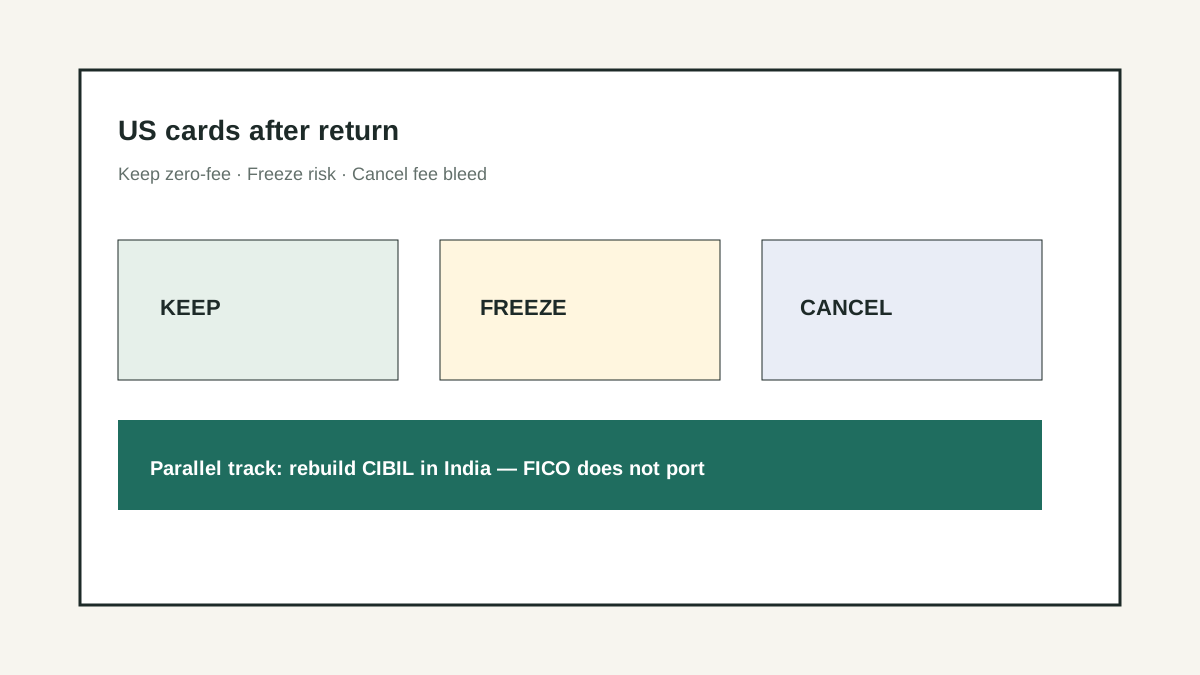
Closing every US card on landing day is a common expensive mistake. The better sequence is: list every product, kill dead annual-fee cards, keep one or two zero-fee cards you can still service from India, protect autopays, then rebuild Indian CIBIL. This page is the keep / freeze / cancel map — not a generic credit-score lecture.
Why “close everything on day one” fails returnees
US issuers care about repayment, fraud risk, and whether you still look serviceable from abroad. Indian lenders care about CIBIL history you do not have yet. If you cancel five aged cards in one week, you can shorten average account age, spike utilisation on whatever remains, and still fail the first India home-loan underwrite because CIBIL is thin.
The useful split is product-by-product: annual fee vs zero fee, autopay dependency, travel card utility, and whether the issuer accepts an India mailing address or only a US address of record. Close the expensive dead weight. Keep a minimal US footprint you can actually operate. Rebuild India credit on a separate track.
Keep / freeze / cancel matrix
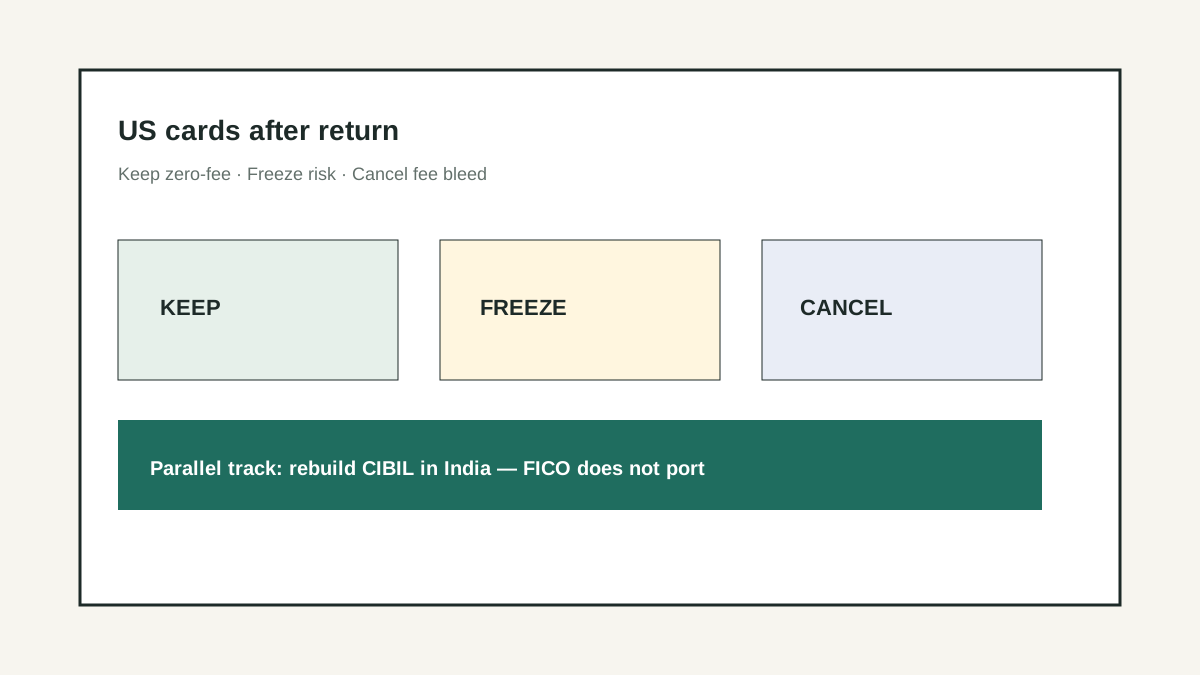
| Card type | Default move | Why | Watch-outs |
|---|---|---|---|
| Zero annual fee, 5+ years old, clean history | Keep if issuer still allows use/login from India | Preserves age and mix while you rebuild CIBIL | Update travel notices; confirm SMS OTP path |
| High annual fee, low use | Downgrade or cancel after last statement paid | Fee bleed with no India benefit | Ask for product change before hard cancel |
| Store cards / 0% promo ending soon | Pay to zero; cancel if fee or fraud risk | Promo traps + hard inquiries not worth it | Confirm payoff posts before cancel letter |
| Business card tied to US entity closing | Close with entity wind-down checklist | Liability and tax reporting stay messy if left open | Coordinate with CPA if business still exists |
| Authorized-user card on parent/spouse | Confirm reporting rules; do not assume FICO help forever | AU reporting varies by issuer | Primary cardholder must stay in good standing |
| Card required for US autopays (insurance, storage, cloud) | Keep until autopays moved | Failed autopay cascades into late fees and freezes | Build a migration list before cancel week |
Nine-step sequence for the first 90 days after return
Inventory every card and annual fee date
Spreadsheet: issuer, last 4, fee month, credit limit, balance, autopays, statement email, phone for OTP. Include store cards and AU cards.
Map every autopay that still hits a US card
Insurance, cloud, phone, storage unit, subscriptions, kids’ apps. Move each to a card you will keep or to India UPI/card once available.
Call issuers about foreign residential status
Ask whether an India residential address is allowed, whether online access from India is blocked, and what mailing address they require. Policies differ by issuer and product.
Set a US mailing path that is real
If the bank requires a US address, use a stable family address or a compliant mail service you control — not a random UPS box you will abandon. Fraud freezes follow bounced mail.
Pay to zero before any cancel
Never cancel with a balance. Confirm the final statement posts, then request cancel or product change in writing/chat and save the reference number.
Cancel fee cards first; keep one or two clean zero-fee lines
Preserve age where it helps your US file without paying rent for plastic you will not use.
Start the India CIBIL track in parallel
PAN, Aadhaar if eligible, redesignated bank KYC, then one controlled Indian card or secured product. US FICO will not appear on CIBIL pulls.
Watch the first three US billing cycles from India
Confirm OTP delivery, international transaction flags, and that autopays still clear. Freeze or replace any card that repeatedly fails login.
Document for tax and reporting if you remain a US person
Credit cards are usually not FBAR assets, but bank accounts that fund them may be. Keep issuer residency answers with your broader US/India file.
Common failure modes after landing
| Failure | Symptom | Fix |
|---|---|---|
| Mass cancel week | FICO drops; stress before US trip | Re-open only if needed; focus on India CIBIL instead of panic |
| OTP on dead US SIM | Cannot approve login or pay | Move 2FA to authenticator/email; keep one recoverable path |
| India IP freeze | Declines after first India login | Call issuer fraud desk; set travel/residency notes |
| Autopay on closed card | Insurance lapses | Autopay migration list before cancel |
| Ignoring annual fee | Charged while “dormant” | Calendar fee month; downgrade 45 days prior |
| No India card for 6 months | Home loan rejection on thin file | Start CIBIL build week one even if US cards remain |
Card wind-down kit
- Full card inventory with fee months.
- Autopay migration checklist completed.
- Issuer call notes: India address allowed? Y/N.
- US mailing path confirmed.
- Final payoff confirmations saved as PDF.
- Cancel/product-change reference numbers.
- One kept zero-fee card stress-tested from India.
- India CIBIL starter product plan (separate track).
Decision flow
Need help with Banking?
Share your blocker in one line. Our experts will reply with practical next steps.
Myth: closing cards always raises your score
Closing a card can raise or lower scores depending on utilisation, age, and mix. Closing a maxed high-limit card after paying it down is different from closing a 12-year zero-fee card you use lightly. Model utilisation after the limit disappears before you cancel. And remember: even a perfect FICO does not create a CIBIL score in India.
Quick visual

Animated decision map

Community signal
What to watch in real discussions
Treat repeated complaints as risk signals rather than official advice. This page does not link to community search results.
Interactive checkpoint
Turn this guide into a decision file
0 of 4 checked
Should I close all US credit cards when I move back to India?
Usually no. Close high-fee or unused risky cards after paying to zero, but consider keeping one or two zero-fee cards you can still manage from India while you rebuild Indian credit history.
Will my US FICO score help me get an Indian home loan?
Not directly. Indian lenders pull Indian credit bureaus (commonly CIBIL and peers). Build an Indian file with KYC and local tradelines even if US cards stay open.
Can I keep a Chase/Amex/Citi card with an India address?
It depends on the issuer and product. Some require a US mailing address or restrict non-resident use. Call the issuer and document the answer before you rely on the card for travel.
What happens if I cancel a card with a remaining balance?
You still owe the balance, and the account may be marked closed with balance due. Pay to zero, confirm the statement, then cancel.
Should I close cards before or after I land in India?
Finish autopay migration and issuer residency checks first. Many people cancel fee cards in the month after landing once India banking is stable — not on the airport Wi-Fi the night before the flight.
Does keeping a US card create India tax or FEMA issues by itself?
A personal credit card is primarily a consumer credit product. Broader US person reporting (FBAR/FATCA) and India resident tax filing are driven mainly by accounts, income, and assets — keep your full cross-border file with a qualified advisor when those rules apply.
Your NRE account redesignation has a deadline.
Banks don't remind you. You need the right account stack before salary, rent, and EMIs start moving. Get the exact sequence.